
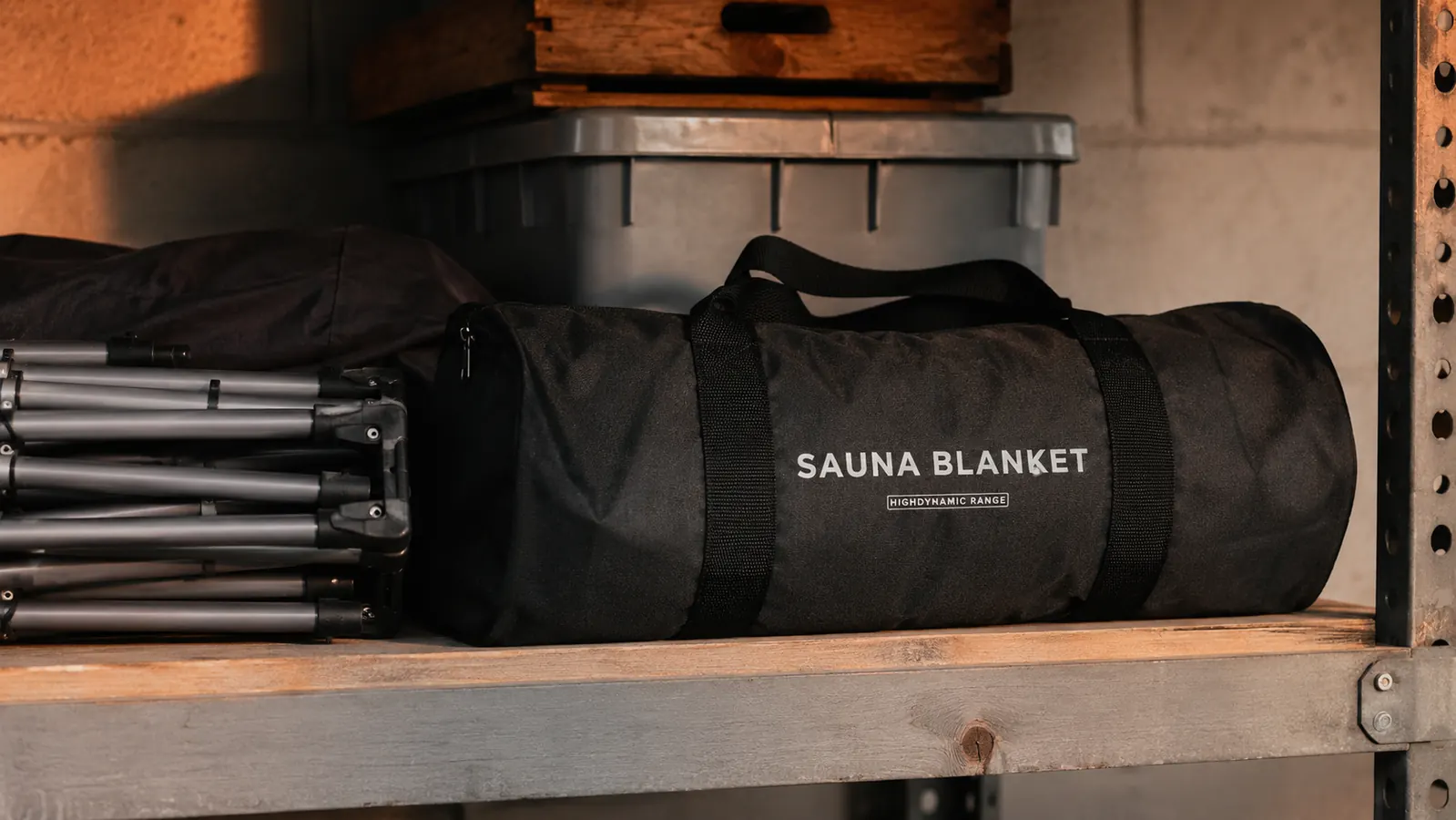
I store both of these things within ten feet of each other right now, next to the wood splitter and about four hundred feet of extension cord I never seem to have enough of. My Lifepro RejuvaWrap infrared sauna blanket lives in a duffel bag on a shelf. My buddy Randy's pop-up sauna tent lives folded against his shop wall, because most nights it's really just a tent frame with a heater bolted to it that he never bothers breaking down. Both promise the same thing: sweat out the stiffness from a twelve-hour shift or a weekend of hauling deer stands, without driving twenty minutes to a spa that closes at six. After running mine three or four nights a week for two months and testing Randy's setup on and off all spring, I can tell you straight, they're not really solving the same problem, even though the boxes make it sound like they are.
Short answer, if you want something you can unroll on the couch, run for twenty minutes, and put away before anyone even notices you used it, get the blanket. If you want a taller, roomier heat session where you can actually sit up straight or move around, and you don't mind giving up a permanent chunk of floor space in a spare room or garage corner, a sauna tent's worth a look, even though I'm not going to link you to a specific one here. Below is everything I noticed setting both up, running both, and cleaning up after both, side by side, so you can pick based on how you'd actually use it instead of how it looks in a photo.
| Infrared Sauna Blanket (Lifepro RejuvaWrap) | Sauna Tent | |
|---|---|---|
| Price Range | Premium range, heater and controls built in | Mid-range for most pop-up tent kits, some sell the heater separately |
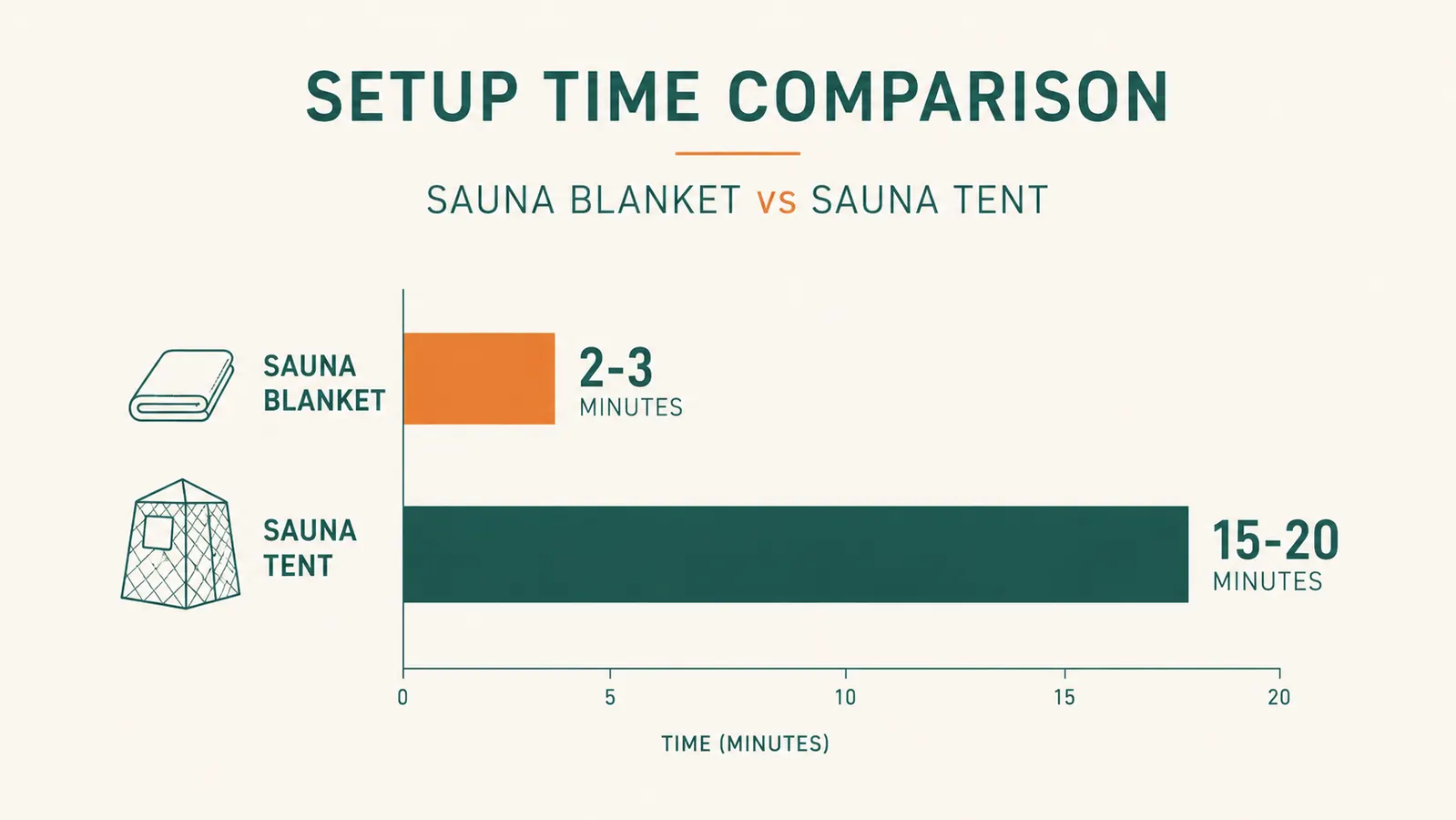
| Setup Time | 2-3 minutes, unroll it and plug it in | 15-20 minutes the first time with poles and zippers, 5 minutes once you get the hang of it |
| Heat Type | Far infrared, direct contact through the fabric, 9 levels up to 158°F | Ambient convection plus infrared, heats the air around you, usually tops out closer to 150°F |
| Space Needed | None, lies flat on a couch, bed, or floor and rolls away after | Roughly 3x3 feet of dedicated floor space, plus 4+ feet of headroom to stand up |
| Whole-Body Coverage | Full body wrap from shoulders to feet, tight and even contact the whole session | Whole body technically, but heat runs uneven, hot near the heater, cooler by the zipper door |
| Portability | Rolls into a duffel bag, fits on a shelf or in a truck bed | Folds down but bulkier, most owners end up leaving it assembled permanently |
| Cleanup | Wipe the inner liner with a towel, under 2 minutes, done | Wipe interior walls where condensation collects, dry the heater tray, more surface area total |
| Noise | Near silent, just a faint fan hum on some settings | Space heater fan runs the entire session, noticeable hum |
| Best For | Solo sessions on your own schedule, small living spaces, minimal maintenance | Wanting to sit up or shift positions mid-session, or sharing across a household |
Where the Sauna Blanket Wins
The biggest thing that sold me on the blanket over Randy's tent is what happens after the timer goes off. I unzip, wipe down the inner liner with a hand towel, roll the whole thing up, and it's back on the shelf in under two minutes. Randy's routine looks different. He has to let the tent cool down, wipe the interior walls where condensation collects, pull the heater tray out to dry it separately, and then decide whether he's actually folding the frame down or just leaving it set up in the corner of his shop, which is what he does about nine times out of ten. When you already spend your workday keeping equipment running, the last thing you want is your recovery routine turning into another piece of gear you have to maintain.
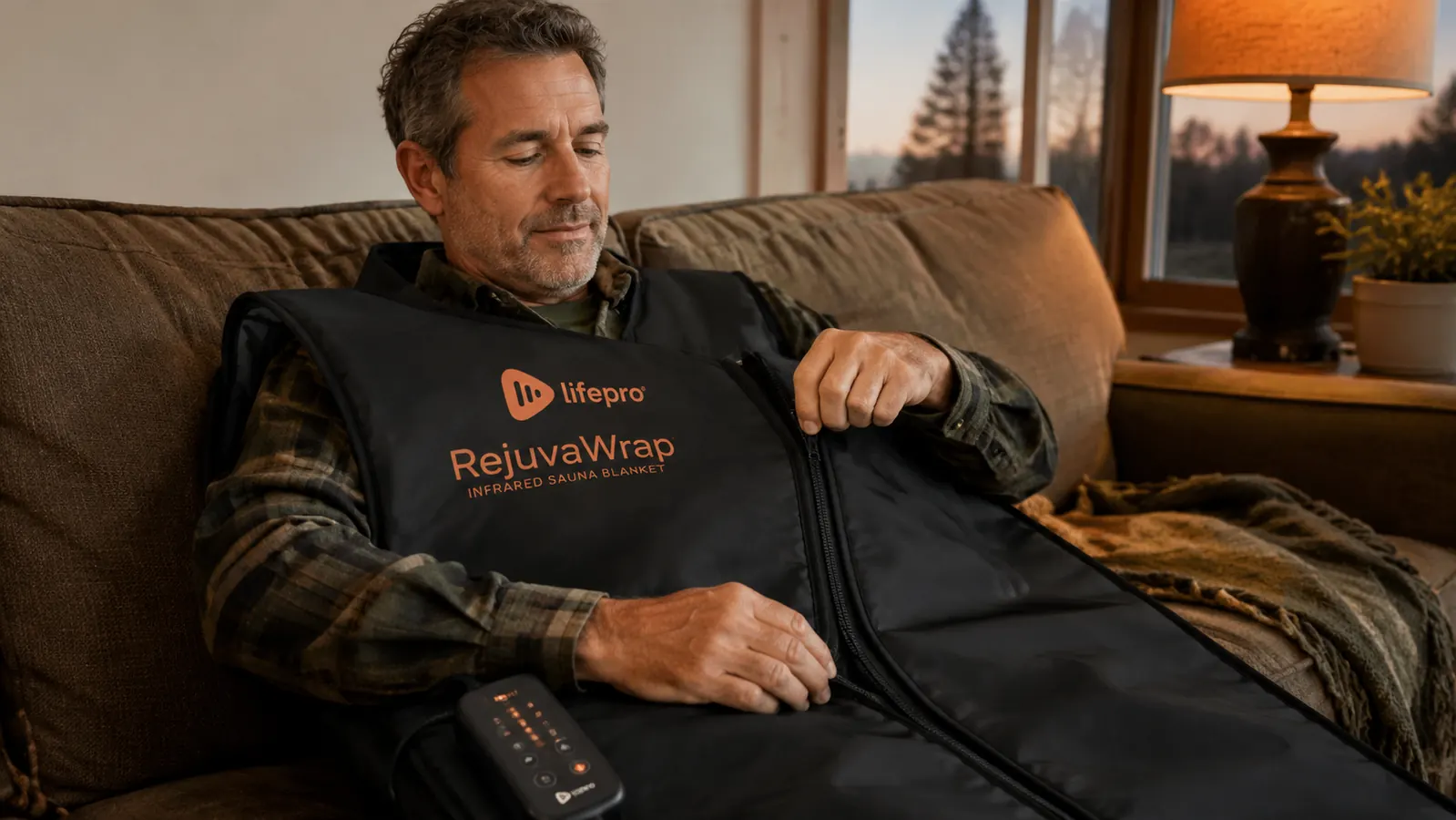
The other thing is direct contact heat. The RejuvaWrap wraps around you like a sleeping bag, so the infrared panels are touching the fabric that's touching your skin for the whole session. I usually run mine at level 6 or 7 out of 9, which gets warm enough that I'm sweating through my shirt by minute twelve. Randy's tent heats the air in the box around him, and depending on where he's sitting relative to the heater, some spots get hot fast while others, especially near the zipper opening, stay noticeably cooler. He's brought that up more than once, sitting with his back to the heater while his knees barely warm up.
Where a Sauna Tent Wins
I'll give the tent credit where it's due. You can actually sit up straight in it, cross your legs, stretch your arms out, even stand up in some of the taller models. In the blanket, you're lying flat the whole time, zipped up to your neck with just your head sticking out. If you've got a bad shoulder or your lower back tightens up mid-session, lying flat and immobile for twenty-five minutes isn't always comfortable, and Randy's said more than once he likes being able to shift positions when he needs to.
It's also more of a shared setup if that matters in your house. Randy's wife uses the tent a couple nights a week too, and there's no wiping down a liner someone else just sweated buckets in, just a quick wipe of the interior surfaces between sessions. My blanket is a one-person deal. My wife's got her own routine and isn't exactly lining up to climb into a bag I just soaked through, and I don't blame her one bit.
Twenty Minutes, Zero Setup, Nothing to Assemble
If cleanup and floor space are the deciding factor, the Lifepro RejuvaWrap is the one that stays in rotation. Unroll it, plug it in, and it's back on the shelf before the news is over.
Amazon Check Today's Price on Amazon →The Heat-Up Time Nobody Tells You About
Neither of these gets hot the second you turn it on, and that trips people up when they first buy one. The RejuvaWrap takes roughly six to eight minutes to climb from room temperature to a level where I'm actually starting to sweat, which means a twenty minute session is really more like twelve to fourteen minutes of real working heat once you count the ramp-up and the last couple minutes cooling before you unzip. Randy's tent takes longer, closer to ten to twelve minutes before the air inside feels properly warm, partly because it's heating a whole enclosed box of air instead of fabric pressed directly against skin. If you're squeezing a session in before dinner or between chores, that difference matters more than it sounds like on paper.
What that means in practice is I plan my blanket sessions around a twenty-five to thirty minute block, not the flat twenty minutes on the marketing copy, because the first several minutes are just warm-up. Randy plans closer to thirty-five minutes for the tent for the same reason, plus the extra few minutes it takes him to actually get it assembled and the heater dialed in if he did break it down. Neither one is instant relief the second you sit down, but the blanket gets you to working heat noticeably faster, which adds up if you're doing this most nights of the week instead of once a weekend.
Setup and Cleanup: The Real Time Cost
This is the part nobody puts on the box. A tent isn't hard to set up once, but it's a project the first time, poles that need to click into the right slots, a zippered door that has to line up, a heater unit that needs its own outlet and clearance from the fabric walls. Randy spent close to twenty-five minutes on his first setup, half of it re-reading the instructions. After that it got faster, closer to five minutes, but it's still five minutes of assembly every time versus my two minutes of unrolling a blanket that's already fully wired.
Where it really adds up is over weeks, not one session. I use mine after almost every shift that runs long, sometimes four or five nights a week. If I had to set up poles and a heater box every one of those nights, I'd skip half of them out of pure laziness. The low-friction setup on the blanket is honestly the reason I've stuck with a routine at all instead of using it twice and letting it collect dust in the closet like half the gear I've bought over the years.
Cost Per Session Over a Year
The tent wins on sticker price, no argument there, it usually runs a good chunk cheaper than the blanket at today's price. But run the math out over a year of actual use and the gap closes fast. I've used mine somewhere around a hundred and fifty times since I got it, which puts the cost per session well under a couple bucks, cheaper than a coffee. Randy's tent cost him less upfront, but he's used his maybe forty times in the same window, partly because the setup friction I mentioned earlier means he skips it on nights he'd have used the blanket without thinking twice. A cheaper thing you actually use beats a more expensive thing you use once a week, but a more expensive thing you use daily can end up costing less per session than a cheaper thing gathering dust in the corner.
Where You'd Actually Put Either One
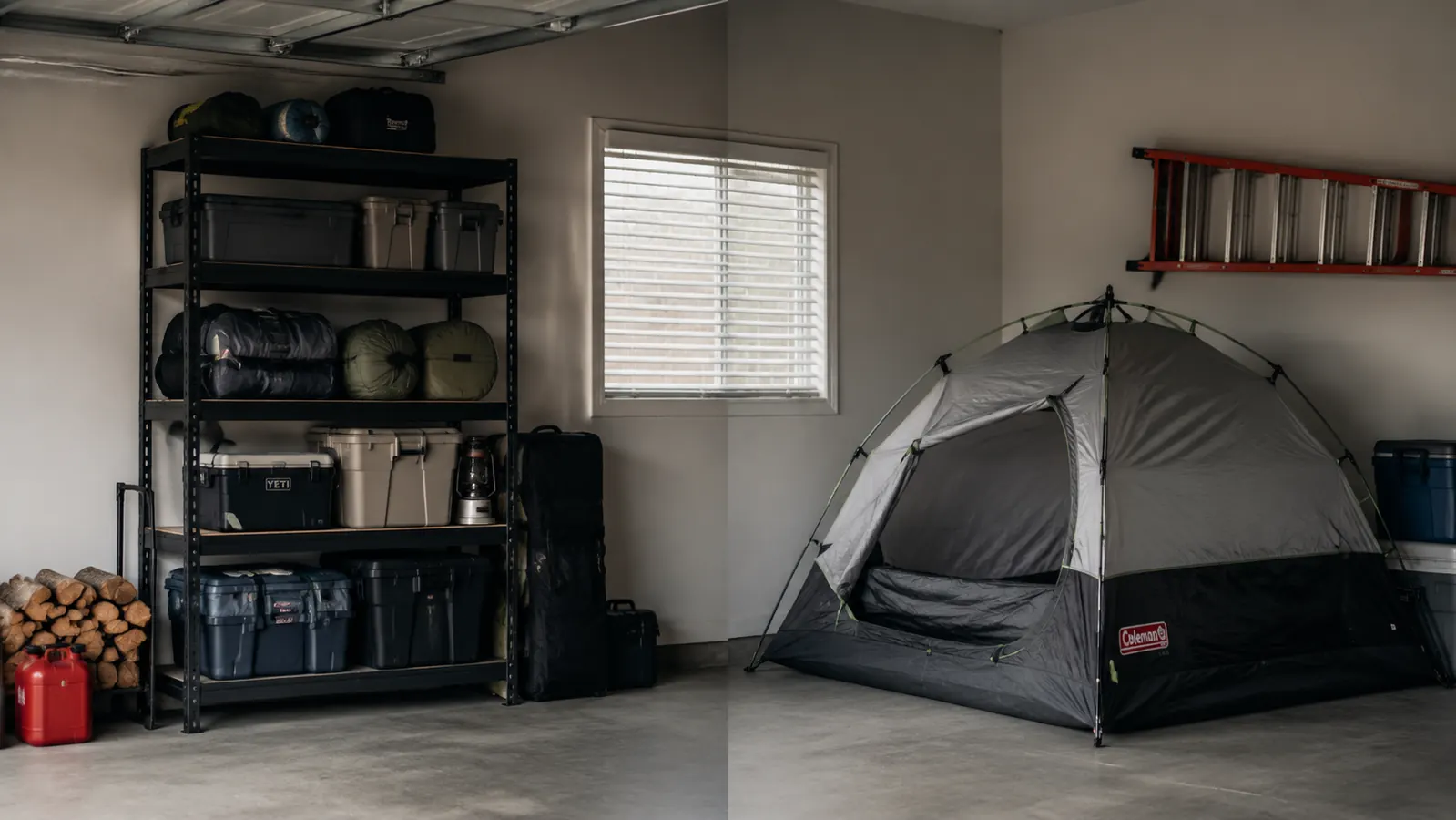
Space matters more than people think going in. Randy's tent lives permanently in a corner of his detached garage because it needs a flat 3x3 footprint plus headroom, and nobody wants to break that down and rebuild it daily. If you've got a spare room, a finished basement corner, or garage space you're not using for anything else, that's not a dealbreaker. But if you're in an apartment, a smaller house, or you just don't want a heater tent as a permanent fixture in your living space, the blanket wins by default. It stores flat in a duffel bag that fits on a closet shelf, in a truck cab, or even packed for a weekend at deer camp.
Who Should Buy Which
If you're a solo user who wants a quiet, low-hassle recovery habit you can do on your own couch after a long shift, and you'd rather not give up permanent floor space, get the sauna blanket. It's what I reach for on a Tuesday night when I'm sore, tired, and not in the mood to assemble anything. If you've got a dedicated spot for it, want to sit upright or move around mid-session, or you're sharing the setup across a couple people in the house, a sauna tent earns its floor space. Just go in knowing you're committing to a semi-permanent piece of furniture, not something you tuck away between uses.
The One That Actually Stays in Rotation
Between the two, the RejuvaWrap is the one I still reach for every week, mostly because it doesn't ask anything of me except twenty minutes and a plug. See the current price and specs on Amazon before you decide.
Amazon Check Today's Price on Amazon →