
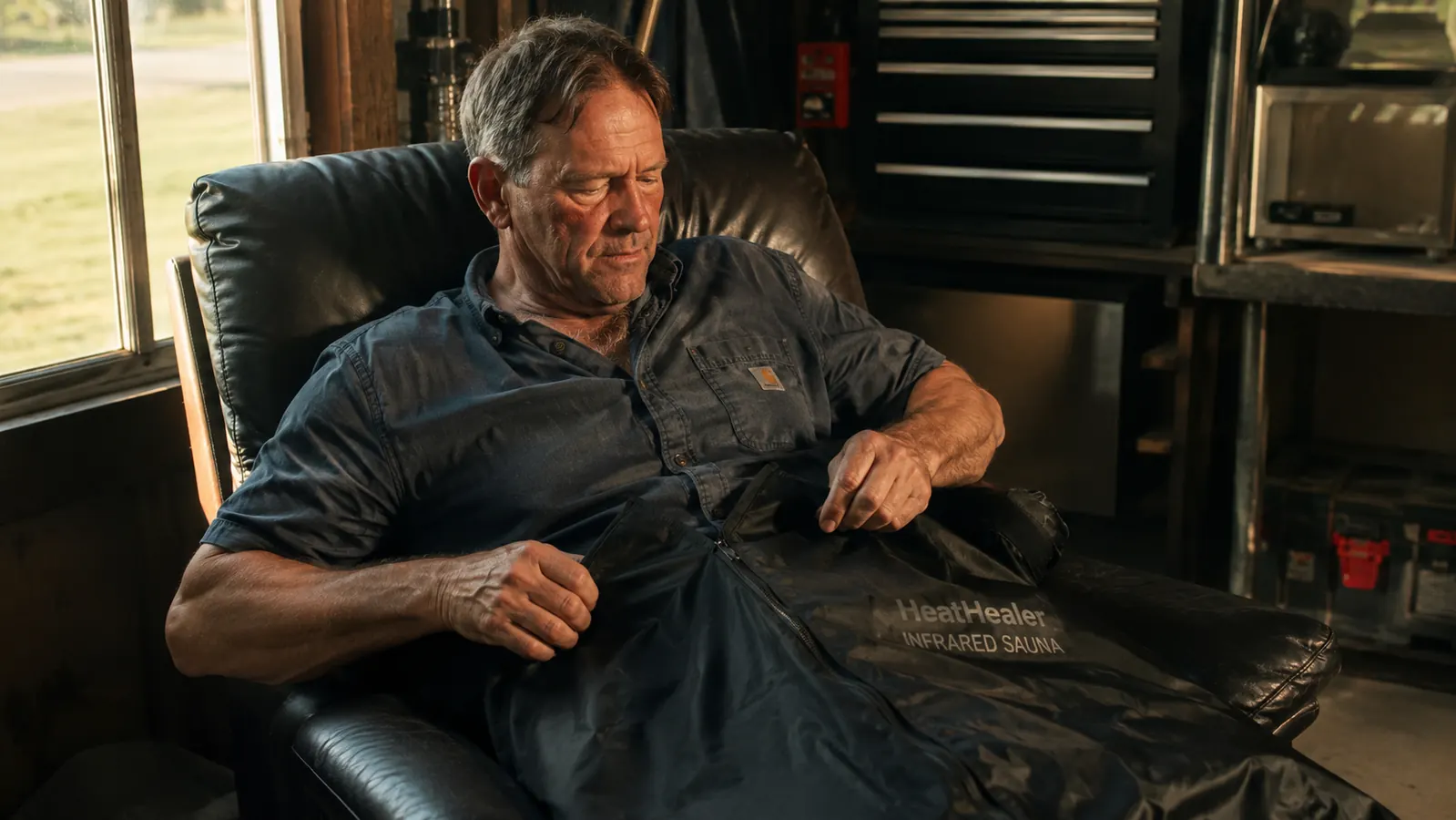
My name's Fred. I run maintenance at a plant outside town, and most weeks that means twelve-hour shifts, four or five days straight, climbing ladders, turning wrenches overhead, and standing on concrete the whole time. By hour nine my lower back starts talking to me. By hour eleven it's yelling. I'd tried the usual stuff, heating pads, a lumbar pillow in the truck, stretching I never actually did, and none of it moved the needle enough to brag about. What finally did something was an infrared sauna blanket I almost sent back twice before I gave it a fair shot, the Lifepro RejuvaWrap.
I'm not a sauna guy. I don't own a robe. My wife Carla laughed the first time she saw me zipped up in this thing on the living room floor, sweating like I'd been splitting wood, remote in hand and the dog Duke giving me a look like I'd lost my mind. Sixty days later, four to five sessions a week, I've got a real opinion on this thing, and it isn't a clean five stars, but it earned a permanent spot next to my recliner.
The Quick Verdict
A legit, low-effort way to sweat out a stiff back after a physical shift, if you can live with a 20-minute warmup and a blanket you have to wipe down every time.
Amazon Check Today's Price →Twelve-Hour Shifts Don't Care About Your Back. This Might.
If you're clocking out sore every night and the heating pad isn't cutting it anymore, see today's price on the Lifepro RejuvaWrap and read the full breakdown below before you decide.
Amazon Check Today's Price on Amazon →How I've Used It
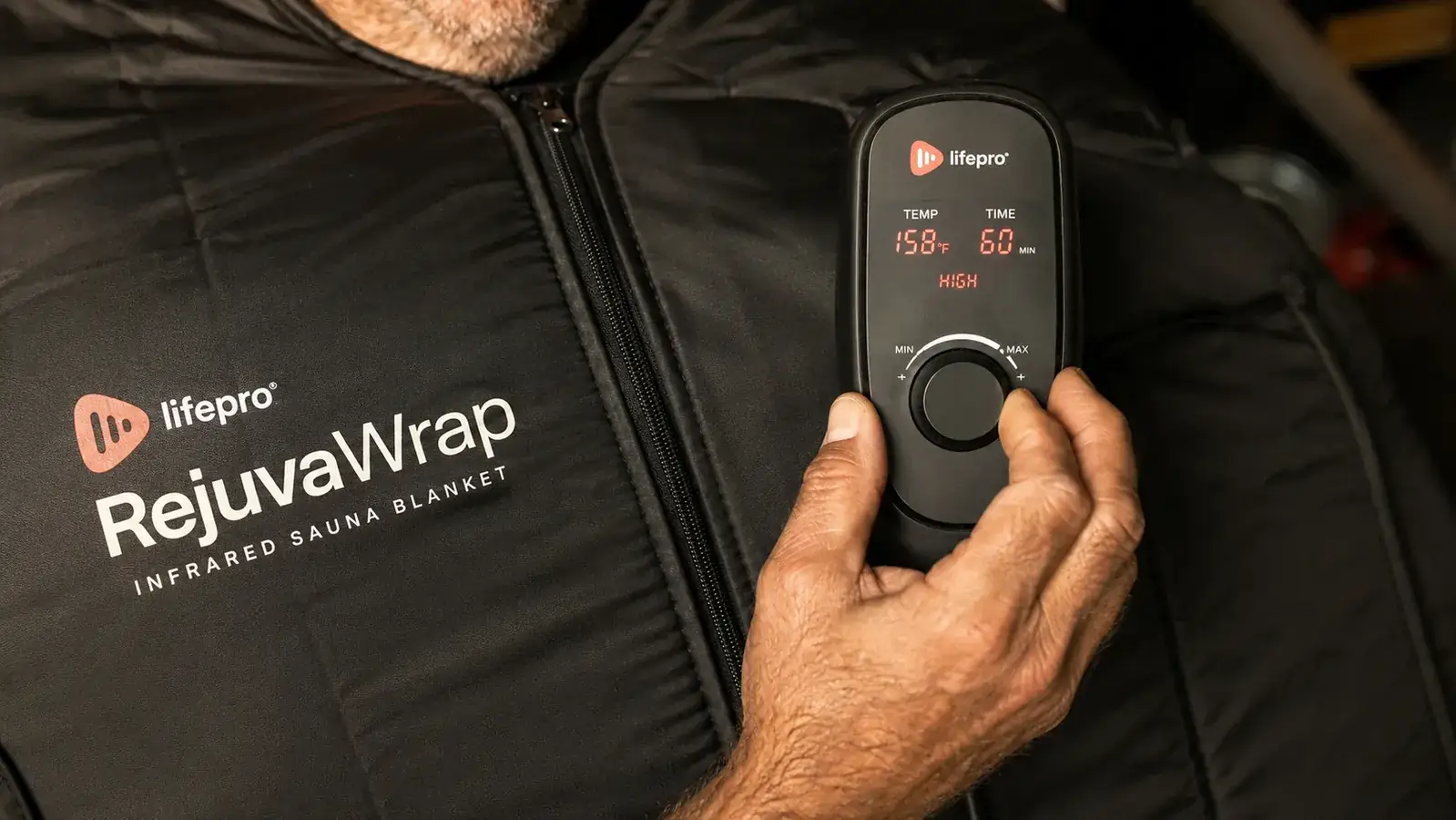
Setup was easier than I expected for something with this many parts. The blanket itself unzips flat, you climb in feet first, zip it up to your chest, and there's a separate head area that stays open so you're not sealed up like a mummy bag. The controller hangs off the side on a cord, nine heat levels, a timer you set in five-minute jumps up to 60 minutes. First session I ran level 3 for 15 minutes just to see what I was dealing with. Within eight minutes I was sweating through my shirt, which I still had on, and that told me everything about how this thing actually performs versus how it looks on the box. The bag it ships in doubles as storage, which I didn't expect and appreciated, since I don't have a garage shelf free for one more thing. The first time through, I'll admit I fumbled the zipper twice trying to figure out which side unzips from the inside, but by the third session it was second nature, maybe 20 seconds from pulling it out of the closet to being zipped in and warming up.
By week two I'd worked my way up to level 6 or 7 for a full 30 minutes, usually starting it the second I walk in the door from a shift, still in my work pants, boots off but that's about it. I keep a towel underneath me now, learned that the hard way after session four left a sweat mark on the carpet that Carla was not thrilled about. I run it on the living room floor most nights, though on weekends I've dragged it out to the garage where I've got a folding cot set up, which honestly is a better setup if you've got the space.
The routine that stuck: zip in, level 6, 30 minutes, phone on the arm of the chair so I can scroll or half-watch whatever Carla's got on. It's become less of a chore and more of the thing I look forward to on the drive home, which surprised me more than anything else about this whole two months.
Nine Heat Levels and Low EMF: What's Actually Under the Zipper
The far infrared heating panels are built into the lining, not some external heat gun pointed at you, and Lifepro markets it as low EMF, which matters more to some guys than others. I'm not the kind of guy who worries about that stuff day to day, but my brother-in-law does, and he asked about it before I'd even finished telling him I bought the thing. From what I can tell wearing it 60-plus times, the heat is even, not a hot spot near the controller and a cold patch by your feet like some of the cheaper mats I've read about.
Nine temperature levels sounds like overkill until you actually use it. Levels 1 through 3 are basically a warm hug, fine for a first-timer or for winding down before bed without working up a real sweat. Levels 4 through 6 are where I live most nights, real heat, real sweat, but not so intense you're clock-watching. Levels 7 through 9 I only touch on weekends when I've got no plans after and can shower right away, because by minute 20 at level 8 you are drenched, no way around it.
The zipper design is worth mentioning because it's the part that would've made or broken this for a guy my size. I'm 6'1", carry more weight than I did at 30, and I was worried I'd be stuffed in there like a burrito. There's enough room to shift positions, cross your arms, even reach the phone without unzipping. The head opening stays cool since it's outside the heated panel area, which keeps you from feeling like you're suffocating, something I genuinely worried about before the first session.
60 Days In: What Changed and What Didn't
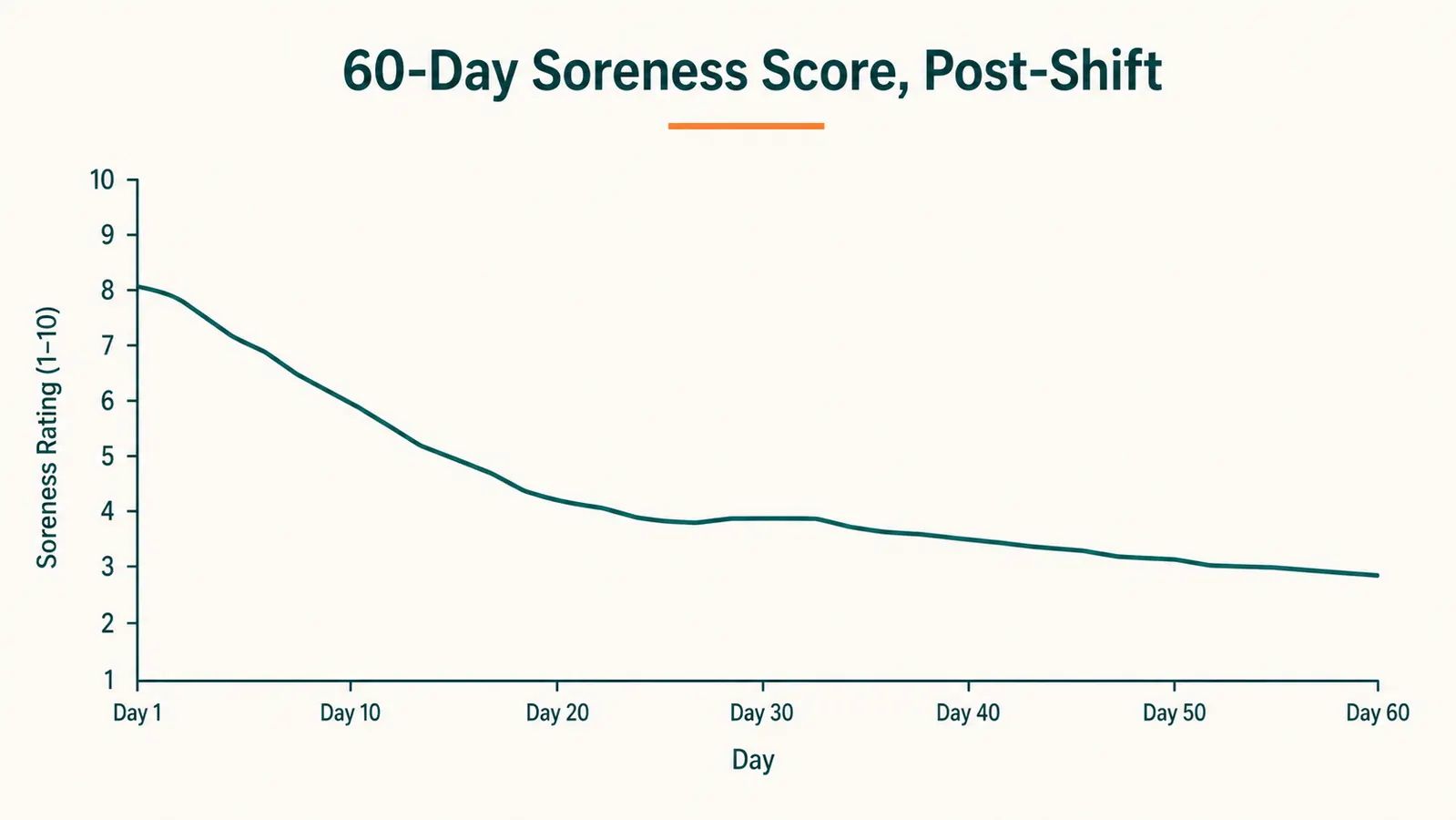
I didn't track anything scientific here, just how sore I felt walking up my own porch steps at night, on a scale I made up in my head. Weeks one and two, not much difference, honestly. I was sore, sweated a lot, felt a little looser right after but back to normal by morning. Somewhere around week three, four to five sessions in a row, that's when I noticed I wasn't dreading the ladder work the next day the way I used to. My lower back still talks to me by hour nine of a shift, that part hasn't changed and I don't think any blanket fixes a back that's been doing this job for 20 years, but the recovery overnight got noticeably faster.
By day 40 I'd stopped taking ibuprofen most nights, which had become a habit I wasn't proud of. That's the single biggest change I can point to. Sleep got better too, not dramatically, but I was falling asleep faster on the nights I used the blanket versus the nights I skipped it, which happened more than I'd like to admit around week five when work got busy and I let the routine slip for about ten days straight.
That gap taught me something. When I picked the routine back up after those ten days off, it took about four sessions to get back to feeling as loose as I had before I stopped. So this isn't a one-and-done fix, it's a habit you have to keep feeding, kind of like the gym, except a lot less effort and you're sitting down the whole time.
The Cleanup, the Sweat, and the Other Stuff Nobody Mentions
Nobody tells you how much you're going to sweat, or how much cleanup that means. You're supposed to wear light clothing or nothing but underwear, and I've settled on an old t-shirt and gym shorts, but even so the interior liner gets damp and needs wiping down with a towel after every session. The included wipeable liner helps, but if you skip cleaning it a few times in a row it starts smelling like a gym bag, which I learned the unpleasant way in week three.
It's also not something you can just leave set up permanently unless you've got dedicated space, which most guys don't. I fold mine and stash it in the hall closet between sessions, and unfolding and re-zipping it every time adds maybe three or four minutes to the whole routine. Not a dealbreaker, but if you're expecting to flop into it the same way you'd flop into a recliner, adjust that expectation now.
The other thing worth knowing before you buy: this runs hot enough that if you've got any heart condition, are on blood pressure medication, or just aren't used to sustained heat, you need to ease in slow and probably talk to a doctor first. I felt lightheaded once, my own fault for jumping straight to level 7 for a full session on day two before my body had adjusted. Start low, build up, drink water before and after. That's just common sense but I'll say it anyway because I didn't follow it at first.
Why I Didn't Go With a Sauna Tent Instead
Before I bought the RejuvaWrap I looked hard at a sauna tent, the kind you sit up in with just your head sticking out. My buddy at work has one and swears by it. The tent takes up real floor space permanently, you can't fold it down after every use, and mine would've had to live in the garage, meaning I'd have to walk out there in whatever weather we were having instead of just zipping in on the living room floor. I go into more detail comparing the two setups in a separate writeup, but for a guy with limited indoor space and a habit of using this thing right after a shift, the blanket format won out on convenience alone.
The tradeoff is that a tent lets you sit upright, which some guys prefer, and it can fit two people if you've got a spouse who wants in on the routine too. Carla has zero interest in getting zipped into a heated bag with me, so that wasn't a factor here, but it might be for you. Price was close enough between the two that it didn't tip the decision either way, so for me it came down to floor space and whether I wanted to walk to the garage in January to use it, and the answer to that was no.
What I Liked
- Real, noticeable drop in next-morning soreness after about three weeks of consistent use
- Nine heat levels means it works for a first-timer and a guy who wants to sweat hard
- Folds down small enough for a hall closet, no dedicated room needed
- Roomy enough for a bigger guy to shift positions without feeling trapped
- Cut my ibuprofen habit down noticeably by week six
Where It Falls Short
- You will sweat through the liner every time, and cleanup adds a few minutes
- Takes 3-4 sessions to feel the real benefit, not an instant fix
- Higher heat levels are genuinely intense, ease in slow or you'll feel lightheaded
- Skip more than a week and you lose progress, it's a habit, not a one-time cure
It's not a miracle for a back that's been doing this job for 20 years. It's a tool that made the next morning hurt less, and after 60 days that was worth more to me than I expected.
Who This Is For
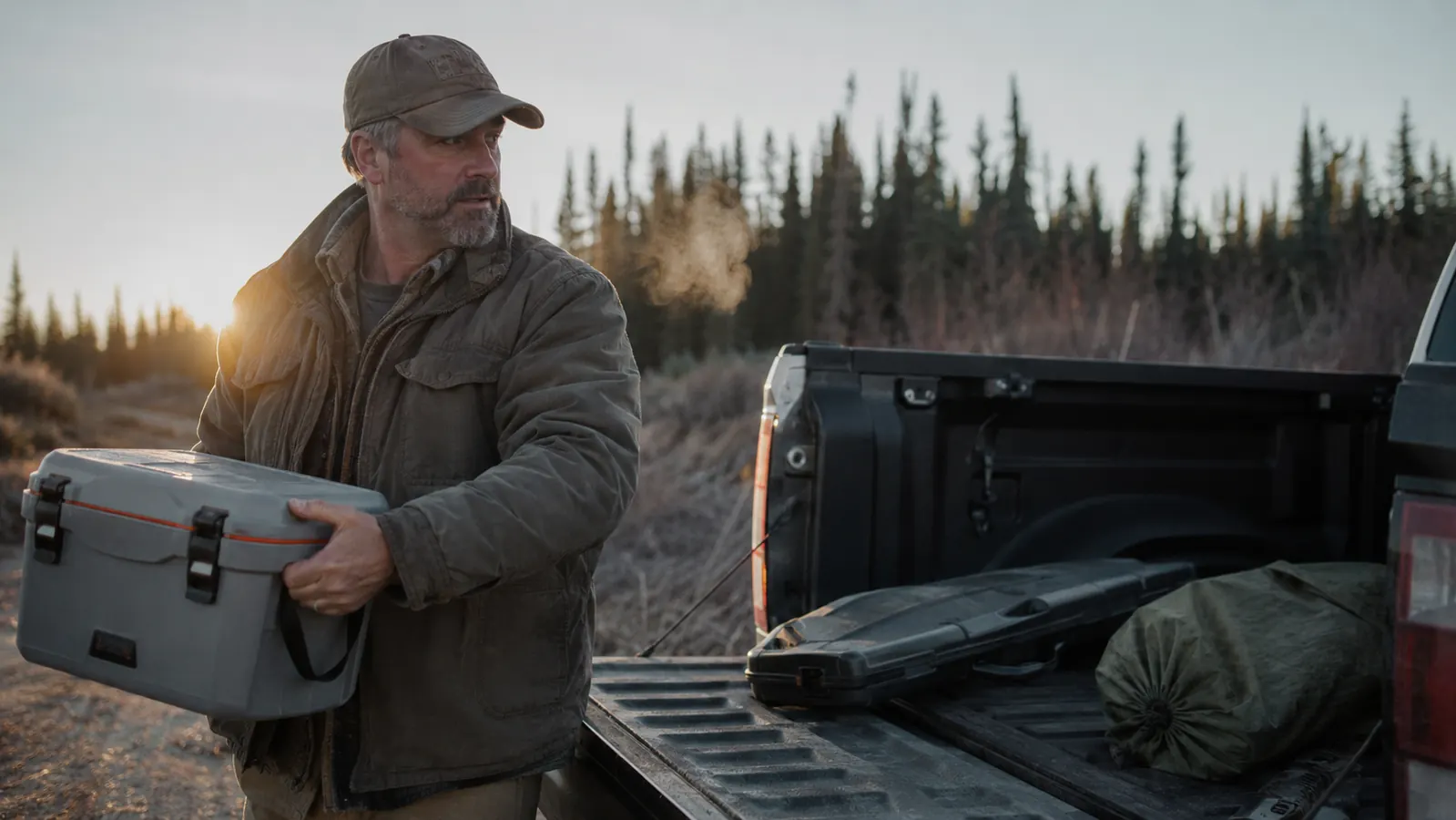
If you're on your feet or your knees all day, ladders, concrete, hauling gear, and you're coming home stiff more nights than not, this earns its place. It's also solid for anyone getting back to camping, hunting, or fishing after a long work week and wants their body ready to go by Saturday morning instead of spending the first day of the trip loosening up. If you've got space for a fold-flat blanket and you're willing to actually use it four or five times a week, not once a month, that's where this thing pays off.
It's also a decent fit for anyone dealing with the kind of general muscle tightness that comes from repetitive work, not just back pain specifically. A guy on our crew with bad shoulders from years of overhead wiring borrowed mine for a week and said the heat got into places a heating pad never touched. That's anecdotal, obviously, one guy, one week, but it lines up with what I felt in my own shoulders after long stretches on a ladder.
Who Should Skip It
If you've got a heart condition, uncontrolled blood pressure, or you're pregnant, skip this one or get a doctor's sign-off first, no exceptions. If you hate the idea of daily upkeep, wiping down a liner, folding it back up, this will end up in the closet by week three like half the treadmills in America. And if you're looking for something that fixes the problem after one or two uses, that's not what this is. It's a habit that pays off slowly, not an overnight fix.
Sixty Days Later, It's Still Part of My Routine
It didn't fix twenty years of wear on my back, but it made the mornings after a hard shift a lot less brutal. If that's the trade you're looking to make, check today's price on the Lifepro RejuvaWrap and see if it fits your routine too.
Amazon Check Today's Price on Amazon →