

Five months ago my lower back had turned into one solid knot from wrestling AC condenser units and boiler valves all day. I run maintenance for a forty-unit apartment complex outside Knoxville, and by Friday afternoon my low back and traps felt like rope pulled tight enough to hum. I'd already tried a foam roller in the garage and a lacrosse ball wedged against a doorframe. Neither one could get into the spot between my shoulder blade and spine where the real knot lived. That's when my wife's sister, who does massage therapy on the side, handed me a silicone cupping set and told me to quit being stubborn and try it.
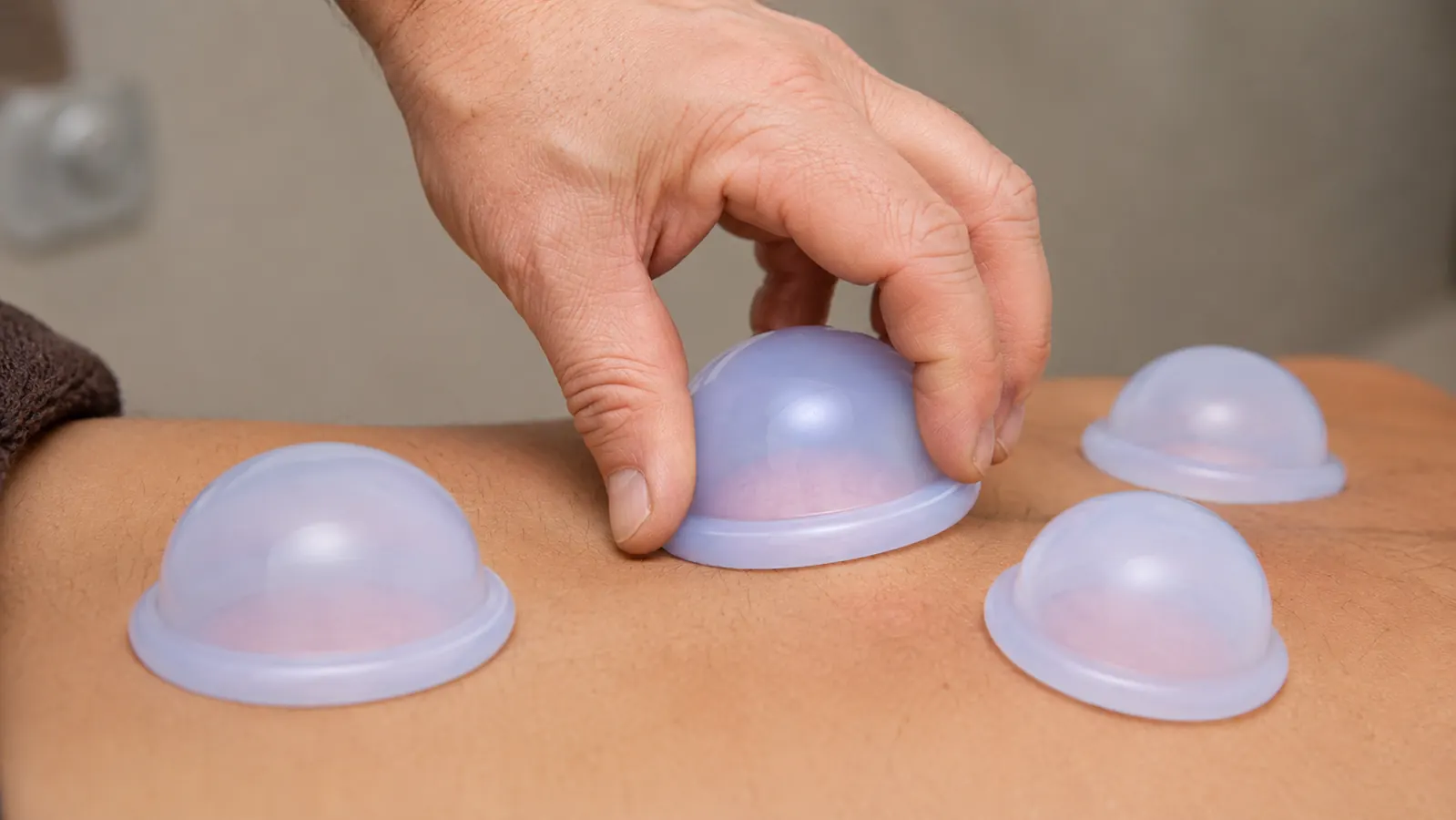
The set is nothing fancy. Four silicone cups, different sizes, no pump, no batteries, no cords. You squeeze the cup, press it against skin, let go, and the suction pulls the tissue up into the cup. I was skeptical it would do anything a cheap lacrosse ball couldn't. Five months and probably 150 sessions later, I'm not skeptical anymore, though I've also got a couple of honest complaints I'll get into, because no fifteen-dollar tool is going to fix a back that's been abused for twenty years without some work on your part too.
The Quick Verdict
A genuinely useful tool for working knots out of your own back and shoulders at home, cheap enough that the learning curve doesn't sting, but it takes real practice to use on yourself and it will leave marks if you're heavy-handed.
Amazon Check Today's Price →Your Back Doesn't Need a Pricey Massage to Loosen Up
A four-cup silicone set costs less than one chiropractor copay and it's sitting in your bathroom drawer every night, not booked out two weeks. Check today's price and see if it's still in stock.
Amazon Check Today's Price on Amazon →How I've Used It
My routine settled in fast because I didn't have much choice. Most nights I get home around 6, shower, and by 7 my lower back has stiffened up from sitting in the truck for the twenty-minute drive home. I keep the Lure Essentials cupping set in the bathroom cabinet next to the shaving stuff, and I use it three to four nights a week, usually right after a hot shower when the skin is warm and the muscle is a little more forgiving.
The two spots I hit almost every time are the low back just off the spine, right where my belt sits, and the trap muscle on my right side that's been tight since I hurt it years ago hauling a compressor up a ladder. I'll place a cup, let it sit for two or three minutes, then slide it slowly along the muscle instead of leaving it static. That gliding technique took me a solid month to get comfortable with. The first few weeks I just parked the cup and left it, which works but does less for the actual knot than moving it does.
On weekends I've also used it on my calves after long hikes and on my forearms after a full day of gripping tools, which isn't something I expected to need but the forearm pump from an eight-hour day with a wrench is real. My oldest son, twenty-two and working construction, borrowed the Lure Essentials set for his shoulders after I raved about it, and now he's got his own.
What's Actually in the Kit
You get four cups in graduated sizes, roughly small, medium, large, and extra-large, all made from a soft but sturdy silicone that doesn't crack or lose its squeeze over time. There's no pump mechanism like the harder plastic cupping kits you see with a trigger handle. You control suction entirely by how hard you squeeze the cup before placing it, which sounds primitive but is actually the whole appeal. You can dial the pressure down for a bony area like your shin or dial it way up for a meaty spot like a glute or trap.
The silicone itself has held up better than I expected. Five months of near-daily use, tossed in a drawer, occasionally dropped on the bathroom tile, and none of the four cups have torn, gone brittle, or lost their grip. I did notice the smallest cup lost a little bit of its snap around month three, meaning it doesn't pull suction quite as hard as it did new, but it still works fine for smaller muscles like the forearm or calf.
There's no instruction booklet worth mentioning, just a small card with a couple diagrams. If you've never done cupping before, plan on watching a few videos to understand technique, because the difference between a cup that helps and a cup that just leaves an ugly welt comes down almost entirely on how you use it, not the tool itself.
Five Months In: What Changed and What Didn't
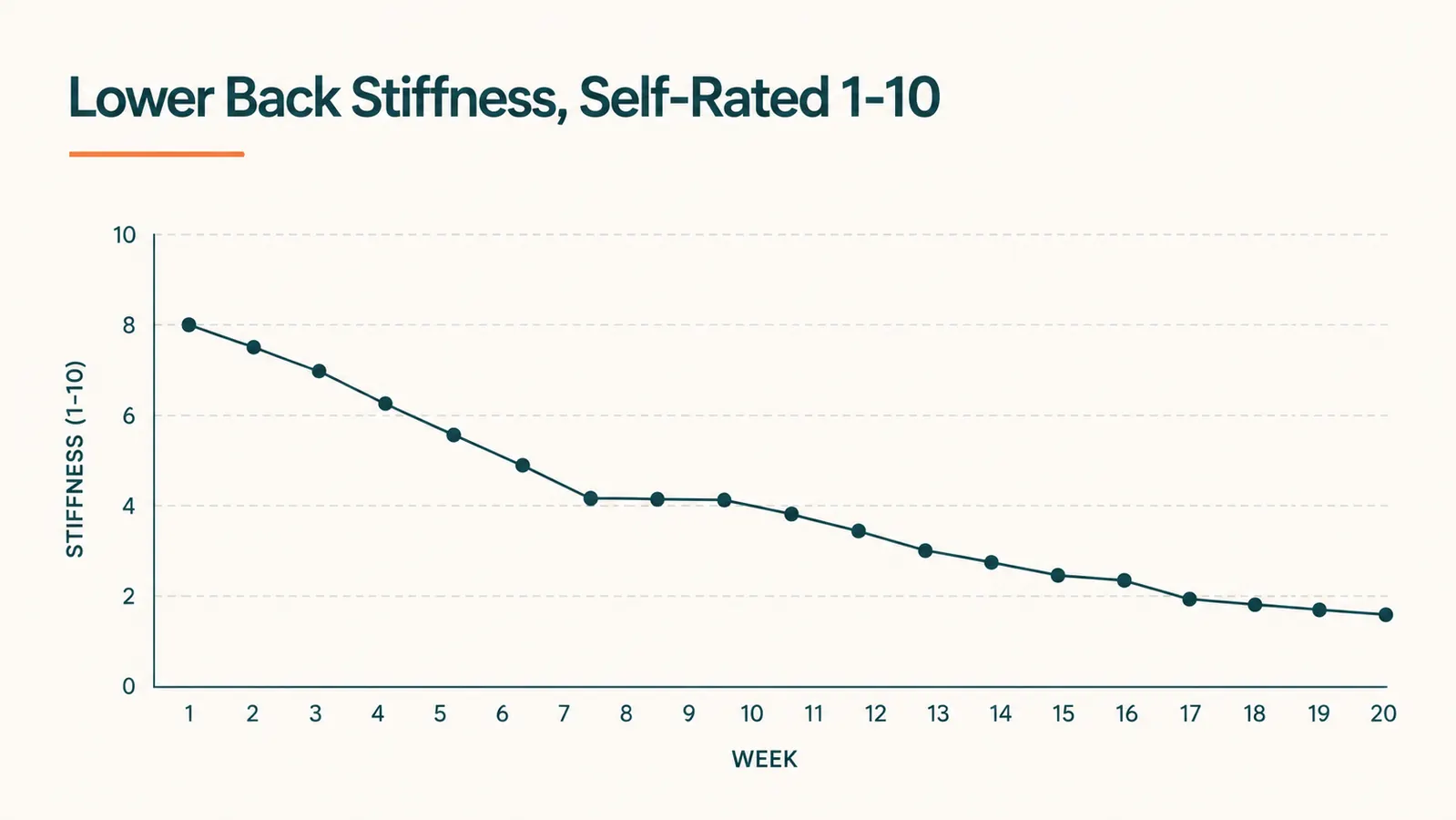
The honest answer is my lower back is noticeably better than it was in February, but it didn't happen in a straight line. The first three weeks I didn't feel much difference at all, mostly because I was still learning proper placement and pressure. Around week four things started clicking, both technique-wise and physically, and by week eight I noticed I wasn't waking up with that first-step stiffness that used to take me halfway across the kitchen to walk off.
There was a flat stretch around weeks eight through ten where nothing seemed to improve further, right around the same time we had a run of emergency work orders and I was pulling extra hours, so I can't fully separate the plateau from just being more beat up in general. After that stretch passed, the improvement picked back up, and by month four the tightness in my right trap, the one that's bothered me for years, had dropped from something I'd rate a 7 out of 10 most evenings to more like a 3.
It hasn't fixed everything. I still get tight after a rough week, and cupping isn't a substitute for stretching or for backing off when something actually hurts rather than just feeling stiff. But as a maintenance tool, something I do most nights the way some guys do a nightly stretch routine, it's earned its spot in the bathroom cabinet.
Cupping vs the Foam Roller and the Lacrosse Ball
I still own the foam roller and the lacrosse ball, and I still use them occasionally, but they solve a different problem than cupping does. A foam roller is good for broad muscle groups, quads, lats, the outer hip, anything big enough to roll across. It's basically useless on the lower back and traps because you can't get controlled pressure in a small, specific spot without your whole body weight fighting you.
The lacrosse ball gets closer, and honestly it's still my go-to for a very specific knot in my glute, but it relies on pressing into a wall or the floor, which means you're limited to spots you can pin the ball against something. Cupping works differently. It pulls tissue up and away from the bone instead of compressing it down, which reaches a different layer of muscle and fascia. For me, the low back and trap knots that never fully responded to the ball responded to cupping within a few weeks.
I wouldn't tell anyone to pick one over the other and toss the rest. They're complementary. On a rough week I'll roll my quads and hips with the foam roller after a hike, hit the stubborn glute knot with the lacrosse ball, and finish with the Lure Essentials cupping set on my back and traps. That combination has done more for me than any single tool on its own.
Getting to Hard-to-Reach Spots
Nobody talks about this part enough. Cupping your own lower back is easy, you can see what you're doing and your arm reaches just fine. Cupping the middle of your own upper back, between the shoulder blades where a lot of guys carry their worst tension, is a different story. I spent the first month twisting my arm behind me at an angle that probably undid half the good the cupping was doing.
What finally worked was recruiting my wife for the spots I genuinely can't reach, maybe twice a week, five minutes tops while we're watching television. She got the hang of it fast, mostly because the tool does most of the work, she just has to place the cup and hold it or move it slow. If you live alone or don't have anyone willing to help, you can still get decent coverage on your lower back, shoulders, and the outer edge of your traps on your own, but the dead center of your upper back is going to stay out of reach without a second set of hands.
I mention this because a lot of the marketing photos for cupping sets show someone working on their own upper back like it's effortless, and in my experience it isn't. Set your expectations around what you can actually reach solo, and if the worst knot you've got is dead center between the shoulder blades, plan on roping in a spouse, a buddy, or accept that spot might need an actual massage therapist every so often.

The Bruising Question
This is the part every review skips over or glosses past, so I'll be straight about it. Cupping leaves marks. Not always, but often enough that you should expect it, especially in the first month or two before you learn how much suction is actually necessary. My first week I left two dark purple circles on my lower back that looked worse than anything actually felt, and my wife asked if I'd been in a bar fight.
Once I dialed back the squeeze and started moving the cups instead of parking them, the marks got a lot lighter, more of a faint pink that fades in a day or two rather than the deep purple bruising. If you bruise easily, or you're on blood thinners, or you've got a job where showing up with circular marks on your neck or forearms is going to raise questions, that's worth thinking through before you start. I keep mine to areas covered by a shirt for exactly that reason.
What I Liked
- Reaches spots between the shoulder blade and spine that a foam roller or lacrosse ball can't touch
- No batteries, cords, or pump to break, four solid pieces of silicone
- Cheap enough to try without much financial risk
- Holds up well to near-daily use over five months
- Suction is fully adjustable by how hard you squeeze before placing it
Where It Falls Short
- Real learning curve, first few weeks won't feel like much until technique clicks
- Will leave bruising or marks if you squeeze too hard or leave a cup static too long
- Smallest cup lost some of its grip strength by month three
- Hard to use on your own upper back without some contorting or a second set of hands
- No instructions worth mentioning, you'll want to watch a couple videos first
It's not a massage. It's more like a stubborn conversation with your own muscle, and after enough nights it finally starts listening.
Who This Is For
If you spend your days on your feet, bent over equipment, hauling gear, or sitting in a truck between job sites, and you've got specific tight spots rather than general soreness everywhere, this is worth having around. It's especially good for the lower back and trap knots that don't respond well to rolling or balling. Guys who like fixing their own problems instead of booking an appointment two weeks out will get the most use out of it, since the whole point is doing it yourself, on your own schedule, in five or ten minutes a night.
Who Should Skip It
If you bruise easily, take blood thinners, or just can't stand the idea of purple marks showing up on your skin even temporarily, this probably isn't for you, no matter how well it works on the muscle itself. It's also not a great fit if you're dealing with acute pain, a fresh injury, or anything a doctor should look at first. Cupping is maintenance, not diagnosis, and it works best on chronic tightness you already understand, not something new and sharp.
Five Months of Knots Later, This Still Earns Its Spot in the Cabinet
It won't replace a real massage every time, but for the nights you just need to work a knot loose yourself, it's paid for itself many times over. See if it's still in stock at today's price.
Amazon Check Today's Price on Amazon →