
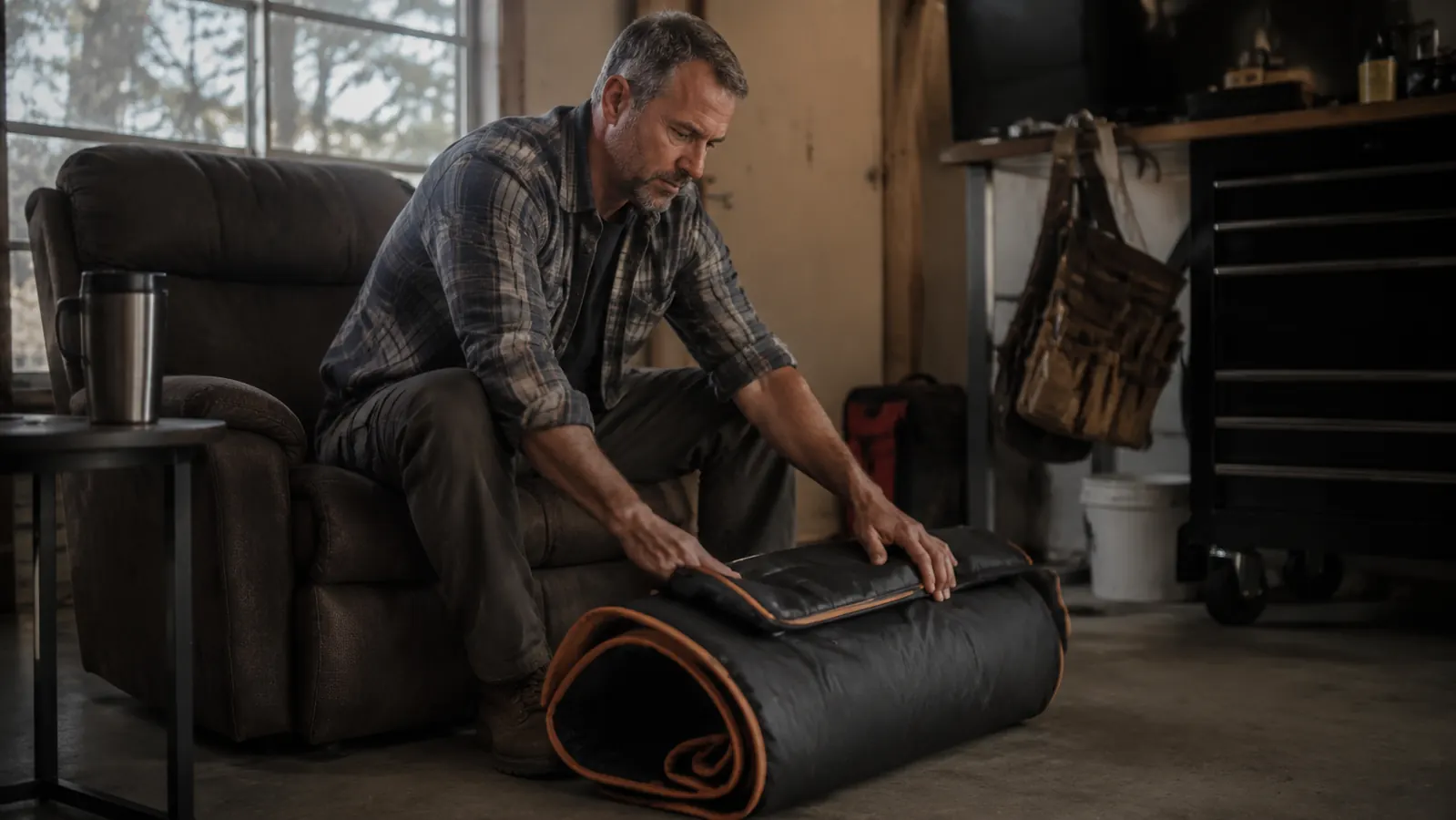
I run maintenance for a mid-size apartment complex, which is a fancy way of saying I fix whatever breaks, all day, on concrete floors, in attics that hit 120 degrees in July. By the time I get home most nights, my lower back feels like it's been in a vice and my knees sound like a gravel driveway. An infrared sauna blanket isn't going to fix bad knees or thirty years of wear and tear, but used the right way, on the right schedule, it's cut my next-day soreness down more than anything else I've tried, and I've tried a lot.
This isn't a review. I've already written that one. This is the actual routine, step by step, the way I do it after a 12-hour shift, after a morning of hauling deer stands, or after two days of setting up camp. No guesswork, no fluff, just what works and what I learned the hard way so you don't have to.
I wrote this because when I first got mine, the instruction booklet told me temperature ranges and safety warnings but nothing about how to actually build it into a real week where you're tired, running on four coffees, and don't have an hour to spare. This is that missing piece.
None of this requires you to be some kind of wellness guy either. I'm not stretching in leggings or drinking green juice. This is a maintenance manager's version of recovery, built to fit around a work truck, a chainsaw, and a tackle box, not a yoga mat.
Skip the trial and error. Here's the sauna blanket I've run this whole routine on.
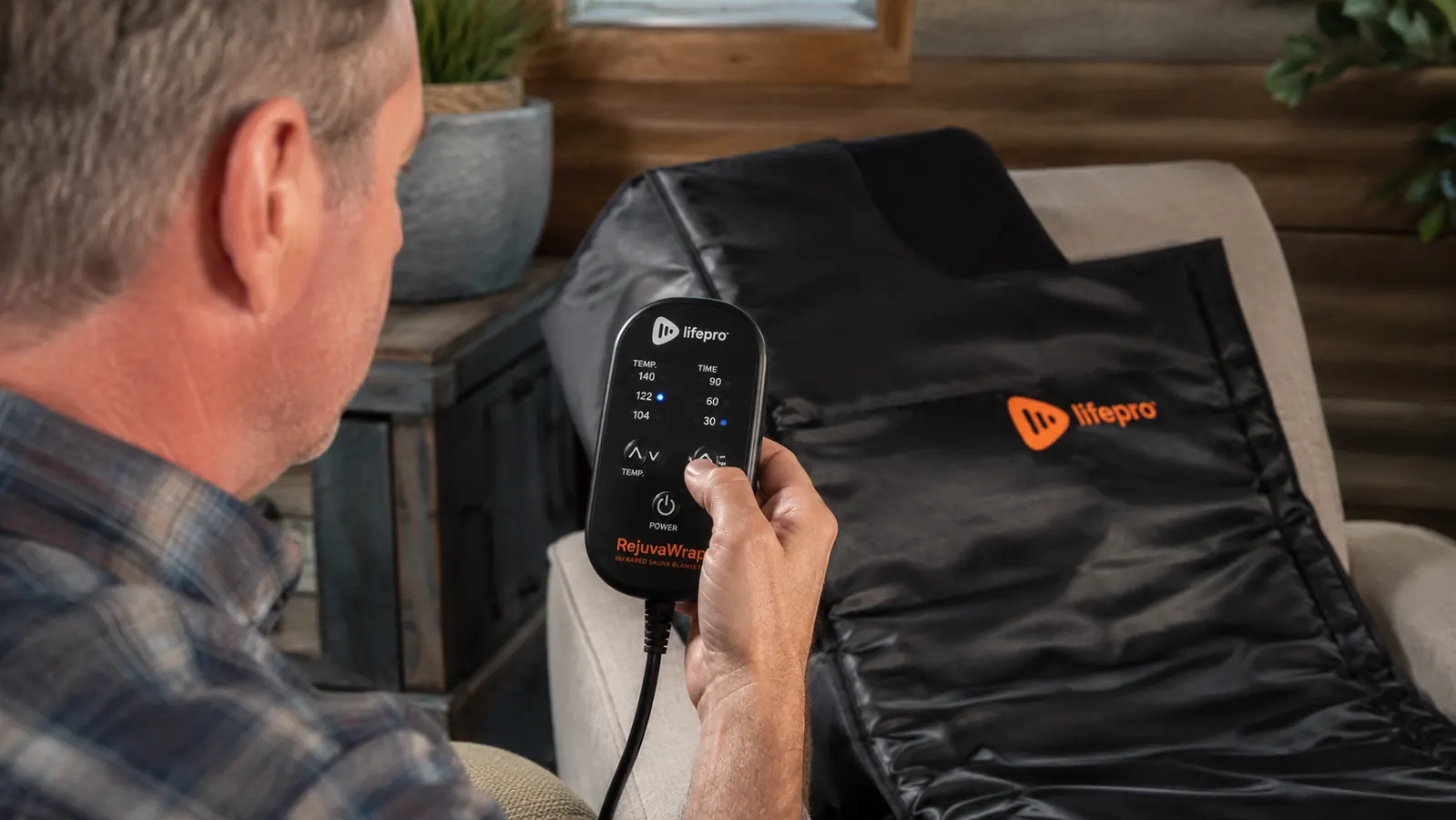
Everything below is built around the Lifepro RejuvaWrap. If you're going to follow the steps, it helps to know what unit they're written for.
Amazon Check Today's Price on Amazon →Why This Order Actually Matters
I didn't land on this order by accident. Early on I tried the Lifepro blanket at random times, whatever temperature felt right that day, and got random results. Some nights it helped a lot, some nights I barely noticed anything the next morning. Once I started doing it the same way, in the same order, every time, the results got consistent instead of hit-or-miss.
None of the five steps below are complicated on their own. The value is in doing them together, in this order, instead of picking and choosing. Skip the setup step and you'll talk yourself out of using it on the nights you need it most. Skip the timing step and you lose a chunk of the benefit. Do all five, and it stops being a nice-to-have and starts being part of how you get through a physical job.
Step 1: Set Up Before You're Too Wrecked to Bother
The biggest mistake I made early on was waiting until I was already dead tired to set the thing up. Rolling out a sauna blanket, laying down a towel underneath it, and running the cord to an outlet takes about ninety seconds if you do it before your shift, and it feels like a chore you don't have the energy for if you wait until after. I keep mine pre-positioned on the recliner in the den, folded open, towel already underneath, cord plugged in and looped up out of the way.
Have a water bottle sitting next to the chair too. I learned that one after climbing out of the Lifepro blanket dripping sweat and having to walk to the kitchen for water, which kind of defeats the purpose of sitting still and recovering.
If you're setting this up for a hunting or camping trip instead of a work shift, the same rule applies. Get it laid out at the cabin or the camper before you head out for the day, not after you drag back in with a stiff hip and forty pounds of gear still on you.
This sounds like a small thing, but it's the difference between using this three or four times a week and using it once and letting it sit folded in a closet. Make it easy to start and you'll actually start.
Step 2: Get In Within an Hour of Finishing Physical Work
Timing matters more than people think. I used to wait until after dinner, sometimes two or three hours after my shift ended, and the difference in how my legs felt the next morning was noticeable. Getting into the blanket within about an hour of finishing the physical work, while the muscles are still warm and blood flow is up, seems to make the heat do more good, faster.
You don't have to shower first. I usually don't. I strip down to shorts, wipe off the worst of the day's grime, and zip in. The blanket is going to make you sweat regardless, so there's no point cleaning up beforehand.
On hunting or camping trips this is trickier since you're not walking straight from work into your living room. What I do is treat the first sit-down of the evening, once the gear's unloaded and the fire's going, as the window. Doesn't have to be exact. Close is good enough.
If you genuinely can't get to it within that first hour on a given day, don't skip it entirely. Late is still better than never. But if you have any control over your evening, protect that window the same way you'd protect a doctor's appointment.
Step 3: Start Low and Build the Temperature Over the Session
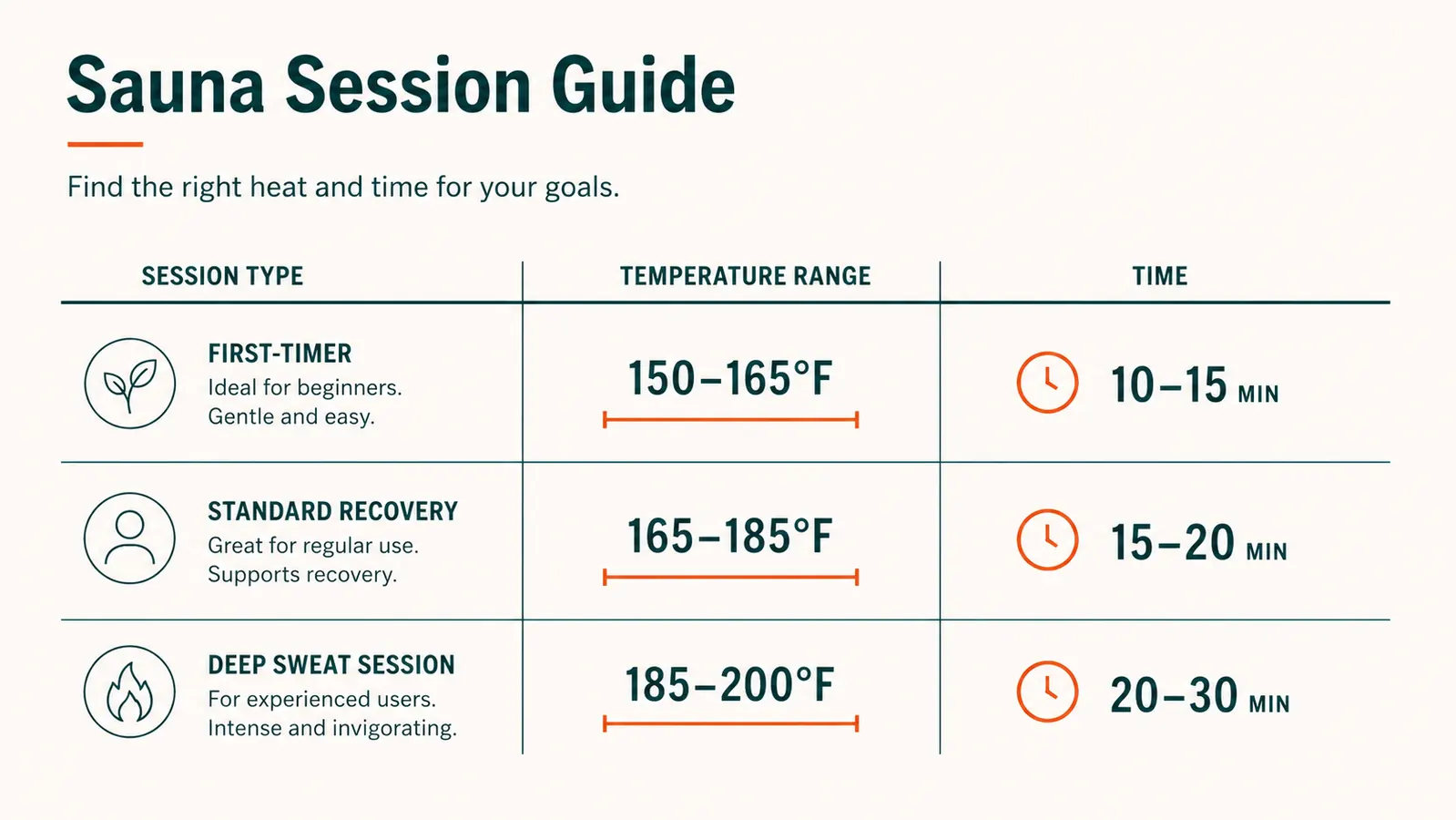
The RejuvaWrap has 9 temperature levels, and I made the mistake early on of cranking it straight to the top thinking more heat means more recovery. It doesn't. It just means you tap out after twelve minutes soaked in sweat and cranky. Now I start around level 3 or 4 for the first five minutes, let my body adjust, then work up to 6 or 7 for the middle stretch.
For a standard after-work session I'm in the blanket for 30 to 35 minutes total. On a rough day, hauling equipment or working a roof in the heat, I'll push closer to 45. I don't go past that. Diminishing returns, and honestly, after 45 minutes you're just uncomfortable.
If it's your first week using one, cut all of this in half. Fifteen to twenty minutes at a lower setting. Your body needs a few sessions to get used to sweating that much while lying still, and there's no medal for pushing through it too hard on day one.
Where you land on the temperature range really depends on the goal for that night. A quick session to just take the edge off a normal day calls for less heat and less time than a deep sweat session after a weekend of real physical work. I've mapped out roughly where I land for each below.
Step 4: Hydrate During, Not Just After
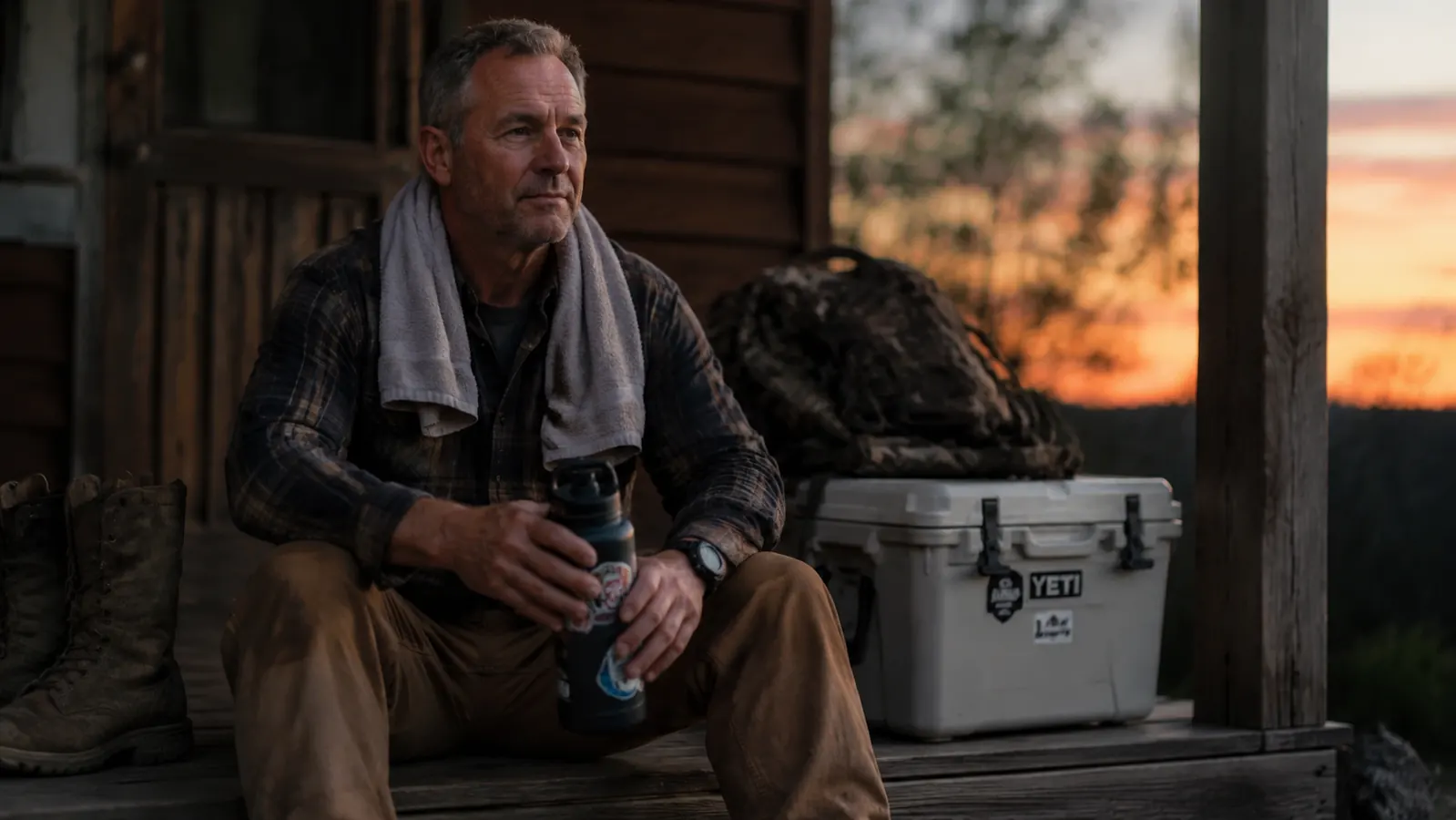
You will sweat more in this thing than you expect, even on a moderate setting. I keep a 32-ounce bottle within arm's reach and make a point of drinking through the session, not just chugging water once I'm out. On heavier days, especially in summer, I'll add an electrolyte packet to that bottle, since plain water alone left me a little lightheaded a couple of times when I skipped it.
If you get dizzy or your heart's pounding harder than it should, unzip and step out. That's not toughness, that's just common sense. The blanket isn't going anywhere and neither is the recovery benefit if you take a break.
I also don't recommend using this right after a big meal. I tried it once after a heavy dinner and spent half the session uncomfortable instead of relaxed. Give it thirty minutes to settle if you've just eaten.
Step 5: Cool Down, Then Stack It With Something Else
When the session's done, I don't jump straight into a hot shower. I sit for a few minutes wrapped in a towel and let my heart rate settle, then rinse off with lukewarm water, not hot. Going from sauna heat straight into a hot shower just keeps you flushed and doesn't help you cool down.
This is also where I've had the best results stacking recovery tools. Ten minutes with a cupping set or a shiatsu massager on my shoulders after the sauna blanket, once my muscles are warm and loose, works better than doing either one cold. The heat opens things up first, then the targeted work finishes the job.
Do this consistently, three or four nights a week, and you start noticing it less in the morning. Not gone, I'm 54 with a body that's earned every ache, but noticeably less stiff climbing out of bed and getting my boots on.
The nights I skip the second half of this step and just crawl straight into bed after the blanket, I still feel decent the next day. But the nights I stack in a few minutes of targeted work on top, I feel it in a good way for two or three days after.
How Long Before You Notice a Difference
I'd be lying if I said I felt like a new man after night one. The first few sessions mostly just felt like sitting in a warm bag, sweating, and wondering if I was doing it right. It took about two weeks of sticking to this routine, three or four nights a week, before I noticed I wasn't dreading the stairs at work the way I used to first thing in the morning.
By week four it had become the kind of thing I'd actually miss if I skipped it, the same way you'd miss a good pair of work boots. That's usually the timeline I tell people to expect. Not overnight, not a miracle, just steady and noticeable if you actually stick with the order above instead of doing it whenever the mood strikes.
What Else Helps
The sauna blanket does the heavy lifting in this routine, but it's not the only piece. Sleep is still the biggest lever anybody has, and no amount of infrared heat makes up for five hours of sleep on a work night. Stretching the big muscle groups, hips, hamstrings, calves, for even five minutes before bed on the nights you use the blanket compounds the effect.
And if you're doing genuinely heavy labor for multiple days in a row, like breaking down a camp or working overtime during a busy stretch, don't skip rest days entirely. The blanket helps you recover faster, it doesn't make you superhuman. I still take a full day off from anything strenuous when I can manage it, sauna blanket or not, and my body notices the difference between a routine that includes real rest and one that doesn't.
The routine only works if you actually do it. I skipped it for two weeks straight last spring and my back reminded me exactly why I started.
Ready to build this routine into your week? Start with the blanket it's designed around.
Every step above assumes the RejuvaWrap's 9 temperature levels and low EMF far infrared heating. If you're going to commit to a recovery routine after physical work, this is the unit I'd point you to first.
Amazon Check Today's Price on Amazon →