
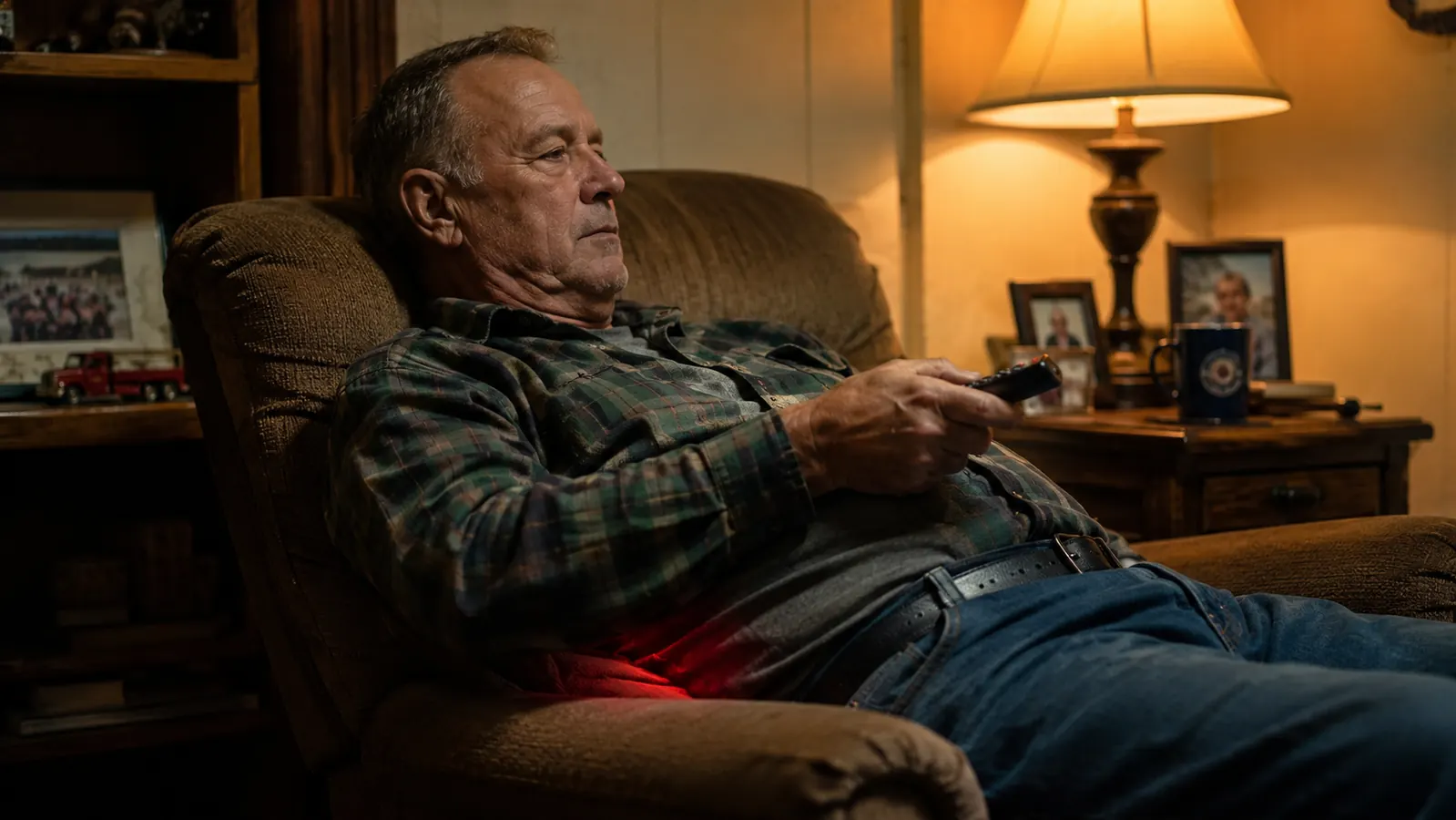
Red light therapy sounded like something you'd see in a spa brochure, not something I'd end up strapping to my back every night after work. I run maintenance at a bottling plant, ten-hour shifts, a lot of ladders and catwalks, and a lower back that's been cranky since a herniated disc turned up on an MRI a few years back. I'd already run through the ice packs, the heating pad, and a TENS unit that spent more time in a drawer than on my body. A buddy of mine at the plant swore by his red light belt, so I finally bought one instead of rolling my eyes at it one more time.
The one I ended up with is the Comfytemp Red Light Belt, 126 LEDs split between two wavelengths, rated 4.6 stars across better than 1,300 Amazon reviews, and it costs a lot less than you'd guess once you check today's price. I've been strapping it on most evenings for a couple months now, and I've got ten specific reasons it stuck around instead of joining the TENS unit in the drawer.
Stop ending every shift with your hand pressed to your lower back
The Comfytemp belt straps on in ten seconds and runs on a timer while you sit down and do nothing else. 126 LEDs, dual wavelength, rated 4.6 stars by over 1,300 buyers.
Amazon Check Today's Price on Amazon →Two Wavelengths Instead of One
The belt runs 660nm red light and 850nm near-infrared at the same time, 22 watts total. From what I've read, the red light works closer to the skin and the near-infrared reaches deeper into the muscle. I'm not a scientist, but having both in one unit is why I passed on the cheaper single-wavelength pads I looked at first. For a deeper breakdown of how I actually run a session, the guide at <a href="/how-to-use-red-light-therapy-for-muscle-recovery">how to use red light therapy for muscle recovery</a> covers timing and placement.
It Takes the Edge Off Morning Stiffness
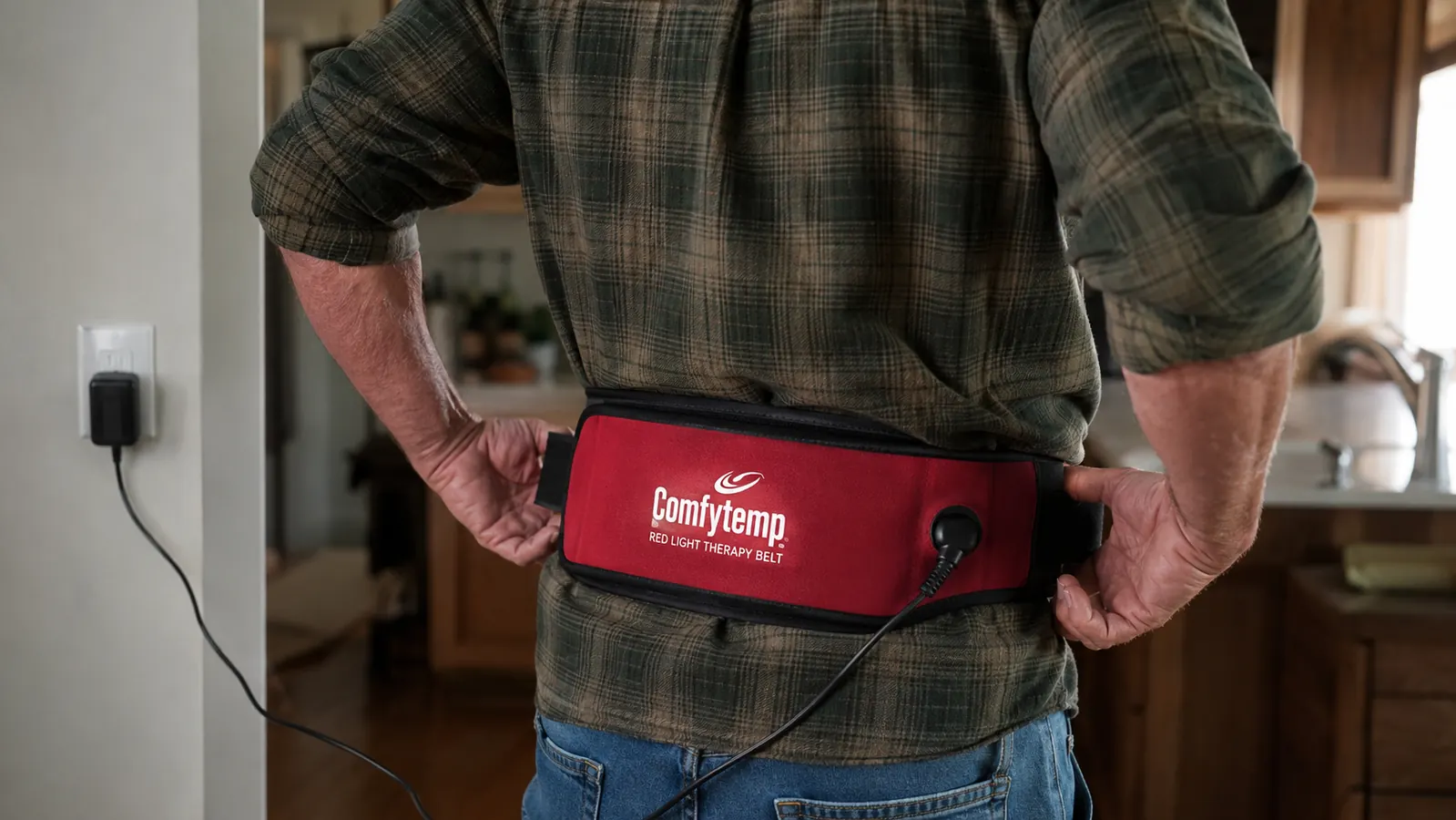
The real test for me isn't how I feel right after a session, it's how I feel getting out of bed the next morning. I used to spend the first thirty seconds sitting on the edge of the mattress working my back loose before I could stand up straight. After a few weeks of running the belt most evenings, that thirty seconds shrank down to almost nothing. It's not gone, but the difference between a night with it and a night without it shows up the second my feet hit the floor.
Hands-Free Beats Anything You Have to Hold
I looked at handheld red light panels before landing on the belt, and the idea of holding a panel over my own back for 20 minutes a night was never going to happen once the season picked up at work. This straps on with a wide hook-and-loop closure and stays put while I do whatever else needs doing. That single difference is the reason I actually use this thing four or five nights a week instead of letting it collect dust like the TENS unit before it.
The Timer Shuts It Off So You Don't Have to Babysit It
You pick a setting, it runs, and it shuts itself off. I don't have to set a phone alarm or remember to check on it, which matters because I will absolutely fall asleep in the recliner if I sit still for twenty minutes after a full shift. A couple times I've woken up an hour later to find the belt long since powered down on its own, still strapped to my back. Small feature, but it's the kind of thing that decides whether a tool gets used daily or gets forgotten.
It Fits Right Where a Working Guy's Pain Actually Lives
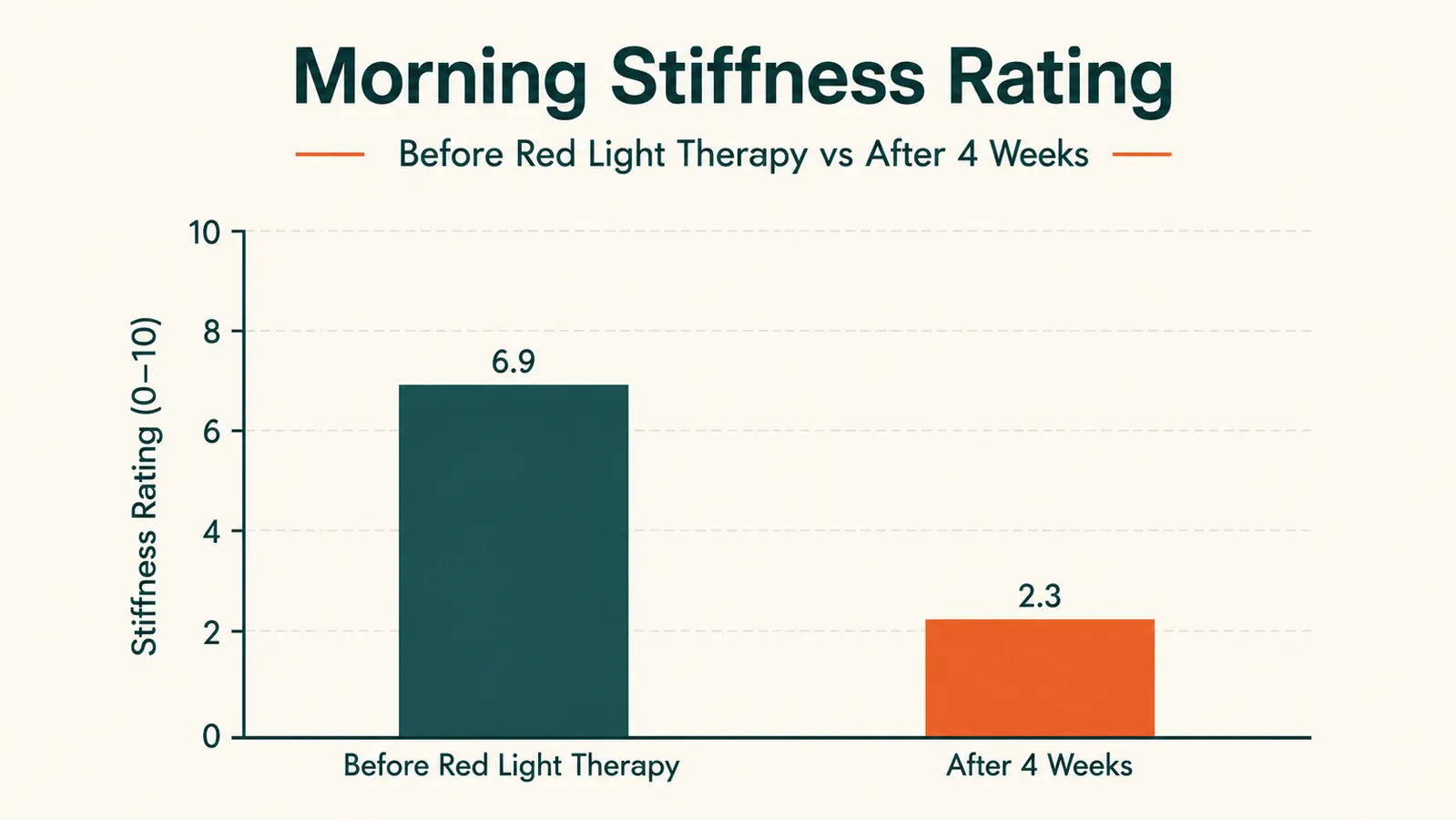
The panel covers a strip roughly the size of two open hands, which lines up almost exactly across the lower back where years of climbing ladders and bending over machinery has done its damage. If your soreness sits in that same lower back band, the coverage is close to ideal without you having to reposition it halfway through a session. It's a targeted tool, not a whole-body one, and for a guy with one bad spot instead of a body full of them, that's actually a plus.
It Warms the Muscle Without Feeling Like a Heating Pad
There's a mild warmth that builds over a session, but it's not the main event, the light is. Compared to a heating pad, which just warms the surface and cools off fast once you take it off, this feels like it's doing something under the skin rather than on top of it. I still keep a heating pad around for stubborn spots, but this has replaced it as the first thing I reach for after a rough day, not the backup plan anymore.
It Costs Less Than One Massage Appointment
A single deep tissue massage in my area runs a considerable amount depending on who you book with, and I was going maybe once a month before I got tired of the drive and the scheduling. This belt costs less than one appointment and I've used it well over sixty times since I bought it. It's not a replacement for a massage therapist's hands, but if the choice is between skipping recovery altogether and having something you can strap on at home for free after the first purchase, this wins on convenience every time.

It Works Before a Hard Day, Not Just After
Most nights it's a recovery tool, but I've started running it in the morning before a day I know is going to beat me up, a full day loading a boat trailer for a weekend at the lake, or a Saturday spent replacing fence posts. Loosening things up before the work instead of only after it seems to cut down how bad the tightness gets by evening. It's a small shift in timing, but it's changed how I think about the belt, less of an after-the-fact fix and more of a tool I use both ends of a hard day.
It Doesn't Require You to Give Up the Rest of Your Evening
A foam roller or a stretching routine asks for your full attention on the floor. This doesn't. I strap it on and go help my daughter with homework, or sit down with my wife Donna while she catches me up on the day. Twenty minutes disappears without me noticing it's happening, which is the only reason a recovery habit sticks around past the first two weeks in my house. Anything that demands I set aside a dedicated block of time tends to quietly stop happening once the season gets busy.
It's Held Up Without Any Dead Spots or Fraying
I've run this thing well over sixty sessions now and every one of the 126 LEDs still lights up even and bright, no dark patches, no flickering. The hook-and-loop strap still grips as tight as it did the first week, no fraying along the edge. That matters more to me than any spec sheet, because I've bought plenty of cheap recovery gadgets that worked fine for a month and then started acting up. This one hasn't given me a reason to complain yet. For the full week-by-week breakdown of how it's held up, see the <a href="/comfytemp-red-light-belt-review-long-term">long-term Comfytemp red light belt review</a>.
What I'd Skip
This isn't a fix for a herniated disc or any structural problem, mine is still there, this just makes the day-to-day soreness easier to live with. It's corded, so it's a living room tool, not something you're wearing out at a hunting camp or a tent site without power. And don't expect results after one session. I ran it for almost three weeks before I noticed a real pattern, not three days. If you're dealing with anything a doctor is actively treating, this belongs alongside that care, not instead of it, and I still see mine regardless of how good the belt feels.
It didn't fix my disc. It fixed the thirty seconds I used to spend sitting on the edge of the bed before I could stand up straight.
A couple months in and it's still the first thing I reach for after a hard shift
The Comfytemp belt covers every reason on this list in one strap-on unit. Dual wavelength, automatic timer, rated 4.6 stars by more than 1,300 Amazon buyers.
Amazon Check Today's Price on Amazon →