
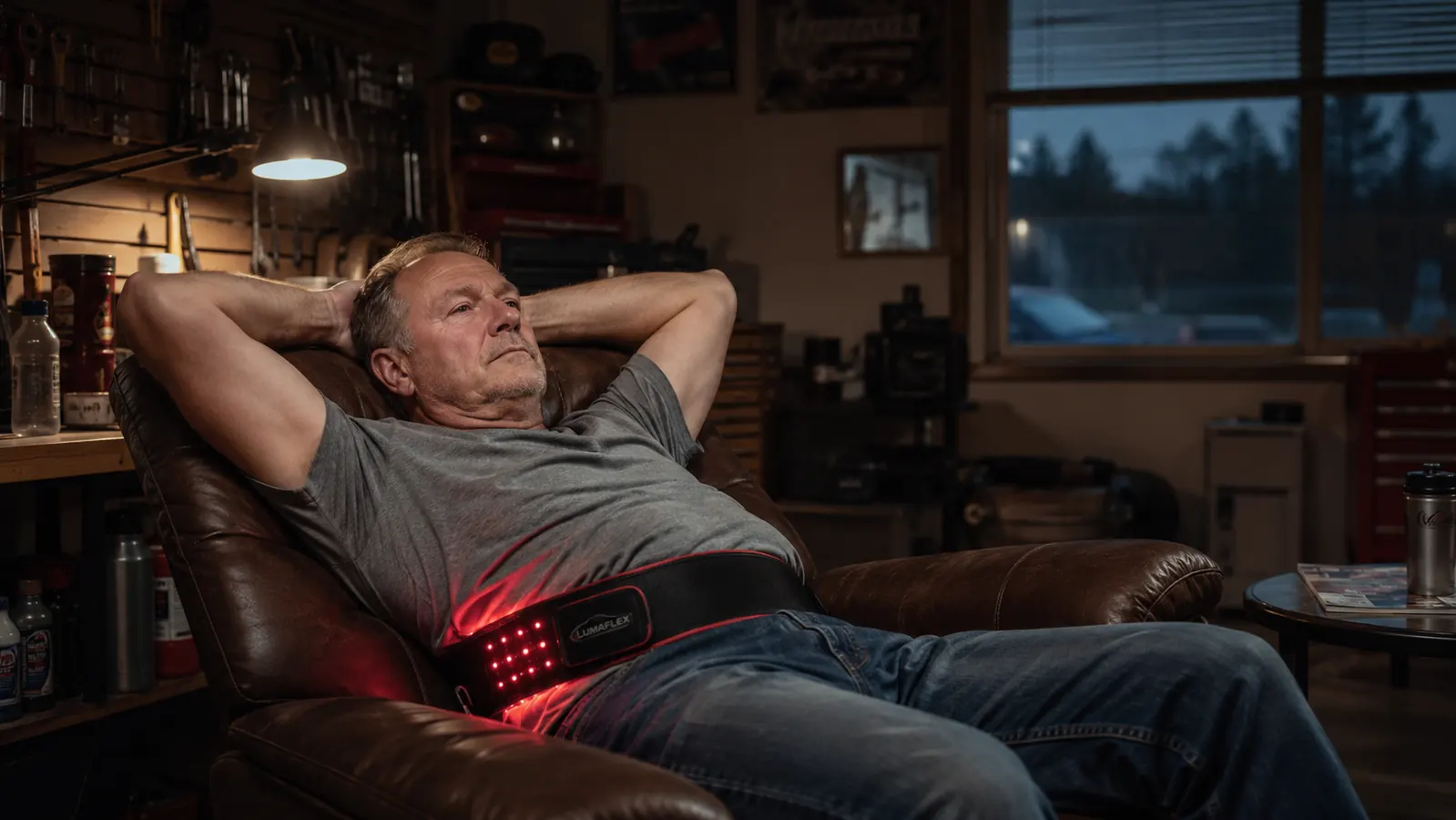
If you're trying to decide between a home red light therapy belt and a real course of physical therapy visits, here's the short answer up front: they're not actually competing for the same job. I've used the Comfytemp red light belt on my lower back almost every night for about eight months, and I've also sat through twelve weeks of physical therapy after a herniated disc a couple years back. One of them fixes a scheduling problem. The other fixes a structural problem. If you already know what's wrong and a doctor or a PT has cleared you for maintenance, the Comfytemp red light belt is the tool that actually gets used, because it doesn't cost you a drive, a copay, or a Tuesday afternoon off work. If you don't know what's wrong yet, or the pain is getting worse instead of better, no belt on the market replaces a licensed physical therapist putting hands on you and building you a real plan.
I'm Fred. I run maintenance at a bottling plant outside town, I'm 54, and between twenty-some years of hauling compressors and pumps around a plant floor and however many Novembers of dragging deer out of the hills, my lower back and my right shoulder have taken a beating. I've paid physical therapy copays out of pocket. I've also strapped a budget red light belt around my waist most nights since last fall while I watch the news. This is a straight comparison of what each one actually does, what it costs you in time and money, and which one earns a spot in your routine. For most guys built like me, it's not really either-or. It's knowing which tool does which job, and knowing that ahead of time saves you from wasting money on the wrong one.
| Red Light Therapy | Physical Therapy | |
|---|---|---|
| Price | Check today's price on Amazon | Moderate copay per visit, ongoing |
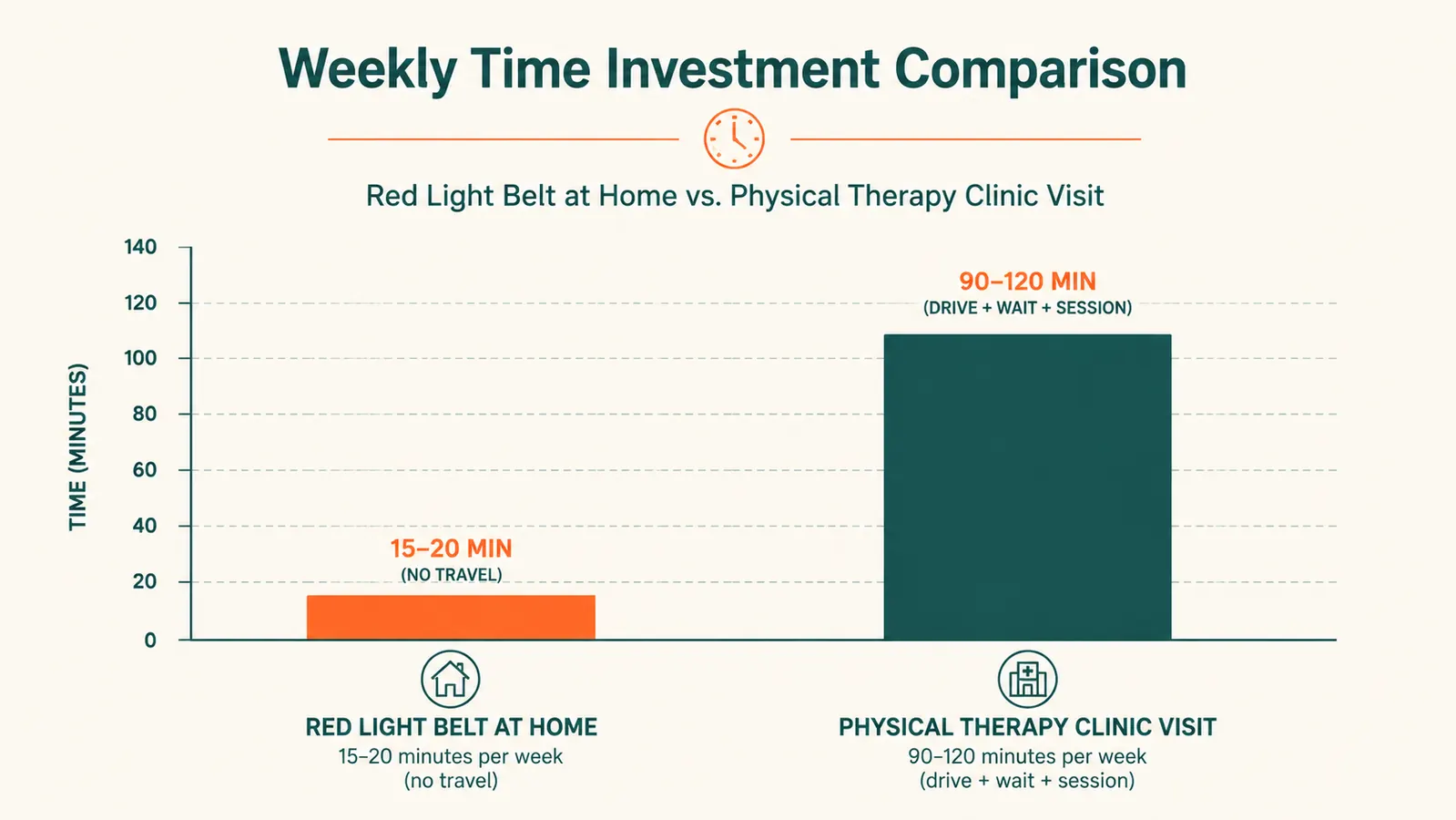
| Time Per Session | 15 to 20 minutes, at home | 45 to 60 minutes plus drive and waiting room time |
| Who Diagnoses the Problem | You, based on where it hurts | A licensed therapist evaluates and builds a plan |
| Best For | Daily stiffness, warm-up, cool-down, maintenance | Injury rehab, post-surgery recovery, structural issues |
| Schedule Fit | Anytime, no appointment needed | Fixed clinic hours, usually weekday daytime slots |
| Insurance Coverage | Not covered, but there's no bill to file either | Often covered with a referral, copays still add up |
| Portability | Packs in a duffel bag, works at deer camp | Tied to the clinic location |
| Hands-On Manual Work | None, it's light output only | Manual therapy, guided stretching, targeted exercise |
| First-Year Cost | Check today's price on Amazon | Premium to very expensive depending on visit count |
The Belt Itself: What You're Actually Buying
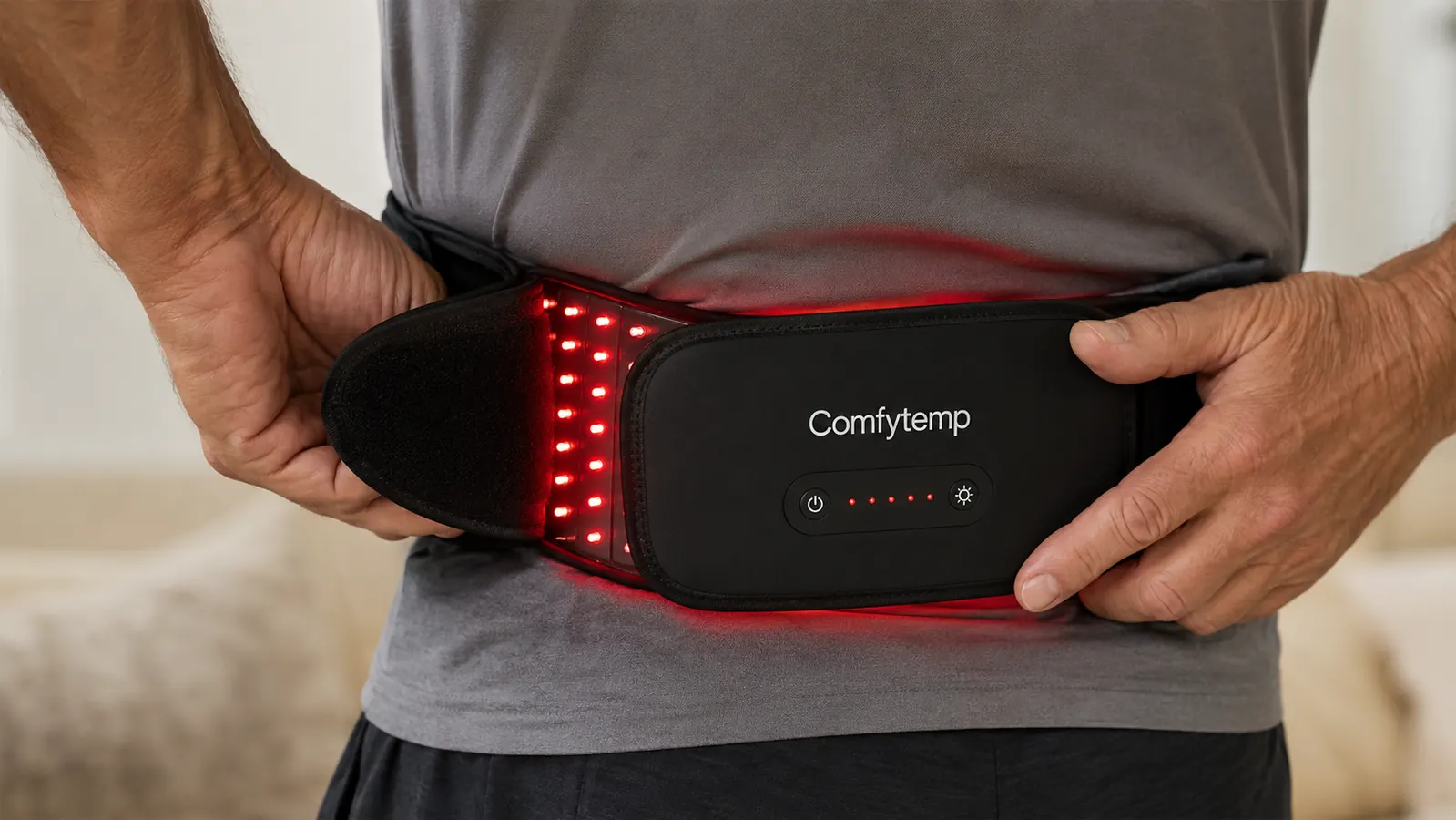
Before I get into where each one wins, it helps to know what the belt actually is, because red light therapy gets lumped in with a lot of wellness nonsense and this one isn't complicated. The Comfytemp belt has 126 LEDs built into a wrap, running at 660nm and 850nm. Those two wavelengths matter because they're the ones most of the research on light therapy actually uses, the 660nm sits at the surface, the 850nm goes deeper into the muscle. It's a corded 22W unit, so no worrying about a battery dying mid-session, and it's got a timer built in so I'm not standing there watching a clock. You strap it on, hit the button, and it shuts off on its own.
That simplicity is the whole point. It's not a device with an app, a subscription, or a manual you need to read twice. My wife uses it on her shoulder, I use it on my lower back, and neither of us had to figure out settings beyond wrap it on and turn it on. That's a low bar, but it's the bar that determines whether something gets used six months from now or ends up in a closet.
Where the Red Light Belt Wins
The belt wins on the thing that actually determines whether recovery habits stick: friction. There's none. I turn it on, wrap it around my lower back, sit in my recliner, and it shuts itself off. No drive across town, no waiting room with a stack of five-year-old magazines, no rescheduling because a work order came in at 3pm. I've used it after twelve-hour shifts, after a full day of loading a duck boat, and once in a motel room on a fishing trip in Idaho because it folds flat enough to fit in a duffel bag next to my waders.
It also wins on cost in a way that's almost embarrassing to compare. My PT copays after the disc injury ran me close to $1,100 out of pocket over twelve weeks, and that was with insurance kicking in the rest. The belt was $35.99 one time, current price, no recurring bill, no insurance paperwork, no calling the clinic to argue about a denied claim. For plain daily stiffness, the kind that isn't a diagnosed injury, just a back that's tired of holding up a body that works for a living, the belt is the tool I actually reach for, because it's the one that doesn't ask anything of my schedule or my wallet.
Where Physical Therapy Wins
Here's where I have to be straight with you, because I'm not going to pretend a light belt does what a trained set of hands does. When I herniated a disc lifting a compressor wrong in 2023, I did not know that's what had happened. I just knew I couldn't stand up straight for three days. A red light belt would have felt nice on it and done exactly nothing to fix it. My physical therapist, a guy named Dave at a clinic near the plant, ran me through movement tests in the first fifteen minutes that told him more about what was actually going on than I'd have figured out in a year of guessing. That's the piece a belt cannot replace. Diagnosis.
PT also wins on accountability and progression. Dave built me a plan that changed week to week as I got stronger, he caught a hip imbalance I didn't know I had that was probably half the reason my back kept flaring, and he pushed me on exercises I never would have done on my own in my living room. A typical visit wasn't a light session at all, it was twenty minutes of hands-on manual work followed by twenty-five minutes of guided exercise where he'd correct my form in real time. If you've got a real injury, a post-surgery recovery, numbness running down a leg, or pain that's getting worse instead of better, that's not a job for a wearable light. That's a job for someone who can put hands on you, watch you move, and adjust the plan based on what they actually see.
For the nights PT isn't an option, this is what I reach for
Once Dave cleared me, the red light belt became my maintenance tool, the thing that keeps a rebuilt back from tightening back up between shifts. No appointment required.
Amazon Check Today's Price on Amazon →What Each One Actually Costs You Over a Year
Run the math and it gets clearer fast. Twelve weeks of PT, twice a week, at a typical copay, lands in the mid-to-upper range before you count gas or a half day of PTO for appointments that only run during business hours. That's real money and real time off work, and for an actual injury it's worth every dollar. But most of us aren't dealing with a fresh injury every month. Most of the year, it's just the ordinary tightness that comes from a physical job, a cold morning in a tree stand, or eight hours on a concrete floor. Paying clinic rates for that kind of maintenance doesn't make sense, and most people don't, which is exactly why the foam roller in the garage and the good intentions from January stop getting used by March.
The belt flips that math. At its current price point, it pays for itself by the third or fourth use if you're comparing it to even one PT copay. There's no ongoing bill, so there's no month where you quietly stop going because the copays added up. It just sits by the recliner, and because it's already there and already paid for, it actually gets used on a Tuesday night instead of becoming another appointment you keep pushing to next week.

How I Actually Use Both
This is the part most comparisons skip. I don't treat this as pick-one. When the disc injury happened, PT was non-negotiable, that's a structural problem and it needed a professional. Once Dave cleared me and gave me a home program of stretches and core work, the red light belt became the thing I layered on top of it, not a replacement for it. I run it most nights after work while I do the stretches he gave me, and honestly the combination works better than either one alone did. The belt loosens things up before I stretch, and the stretches are the part that's actually rebuilding the muscle that's supposed to be supporting that disc.
If you're mid-way through a PT program right now, ask your therapist whether a red light belt makes sense as a between-session tool, most of them are fine with it since it's low heat and non-invasive, it's not going to interfere with anything they're doing. If you're not currently in PT and you're just dealing with the regular wear of a physical job, hunting season, or long shifts on your feet, that's exactly the gap the belt is built for. Where it doesn't belong is standing in for a real evaluation when something feels genuinely wrong, sharp pain, numbness, or anything that's getting worse week over week instead of better.
A red light belt never diagnosed anything in its life. It just makes the ordinary stuff more bearable, every single night, without asking for an appointment.
Who Should Buy Which
If you've got a diagnosed injury, surgery in your recent past, or pain that's spreading, numb, or getting worse, call a physical therapist first. That's not a place to save money by guessing with a light belt instead. If your situation is the more common one, a physical job, an old injury that's healed but still talks to you on cold mornings, general stiffness from work or hunting season or standing on a concrete floor all day, the red light belt earns its spot easily. It's cheap enough that the cost isn't really a decision, and it's convenient enough that it actually gets used instead of sitting in a drawer next to last year's resolution. The honest answer for most people reading this is both, at different times, for different reasons. Just don't ask the budget belt to do the premium job.
Cheap enough to just try, simple enough to actually use tonight
No appointment, no copay, no drive across town. Wrap it on, sit down, let it run its timer.
Amazon Check Today's Price on Amazon →