

My lower back has been arguing with me since 2019, when an MRI showed a herniated disc at L4-L5 after one too many years of climbing ladders and hauling motors around the plant floor. I run maintenance at a bottling facility outside Springfield, ten-hour shifts on concrete, and by the time deer season rolls around in November my back is usually the first thing to quit on me, not my legs or my shoulders. I bought the Comfytemp Red Light Belt in late May, mostly because I was tired of the ice-heat-ice routine and wanted something I could strap on, sit down with a beer, and forget about while it did its thing.
I'll be straight with you up front. I didn't expect much. I've tried a lumbar heating pad, a TENS unit that ended up in a drawer, and two rounds of physical therapy that helped for a few weeks and then faded. This is six weeks of actually wearing the Comfytemp belt most nights, plus a couple weekends of splitting wood and one weekend hauling a deer stand into the truck. Here's what I found, good and bad, no sugarcoating.
The Quick Verdict
A solid, honest recovery tool for a stiff lower back when you actually use it, not a miracle fix, and it earns real estate in my nightly routine because I reach for it instead of the heating pad now.
Amazon Check Today's Price →Tired of ending every shift with your hand pressed to your lower back?
The heating pad and the recliner only do so much once you're back on your feet the next morning. This is the belt I've been strapping on every night for six weeks. Check today's price and see if it's in stock.
Amazon Check Today's Price on Amazon →How I've Used It
My routine is boring and that's the point. Most nights, after I get home around 5:30 and shower off, I strap the belt on over a t-shirt, set the 20-minute timer, and sit on the couch with my wife Donna while we catch up on the day or watch whatever she's got queued up. It plugs into the wall, so I'm parked in one spot for the session, usually the recliner or the end of the couch closest to the outlet. Twenty minutes, timer shuts it off automatically, I peel it off and go make dinner.
On weekends I've used it differently. After splitting a truckload of firewood in June, I ran it right when I came inside, before I'd even eaten, because that's when my low back is tightest. I took it up to our place on Table Rock Lake for a long weekend in early July too, plugged it into an outlet in the cabin instead of trying to run it off the truck inverter. It's corded, not battery powered, so that's something to plan around if you're thinking about using it out at a hunting camp or a tent site without power. It's a living-room tool, not a backcountry one.
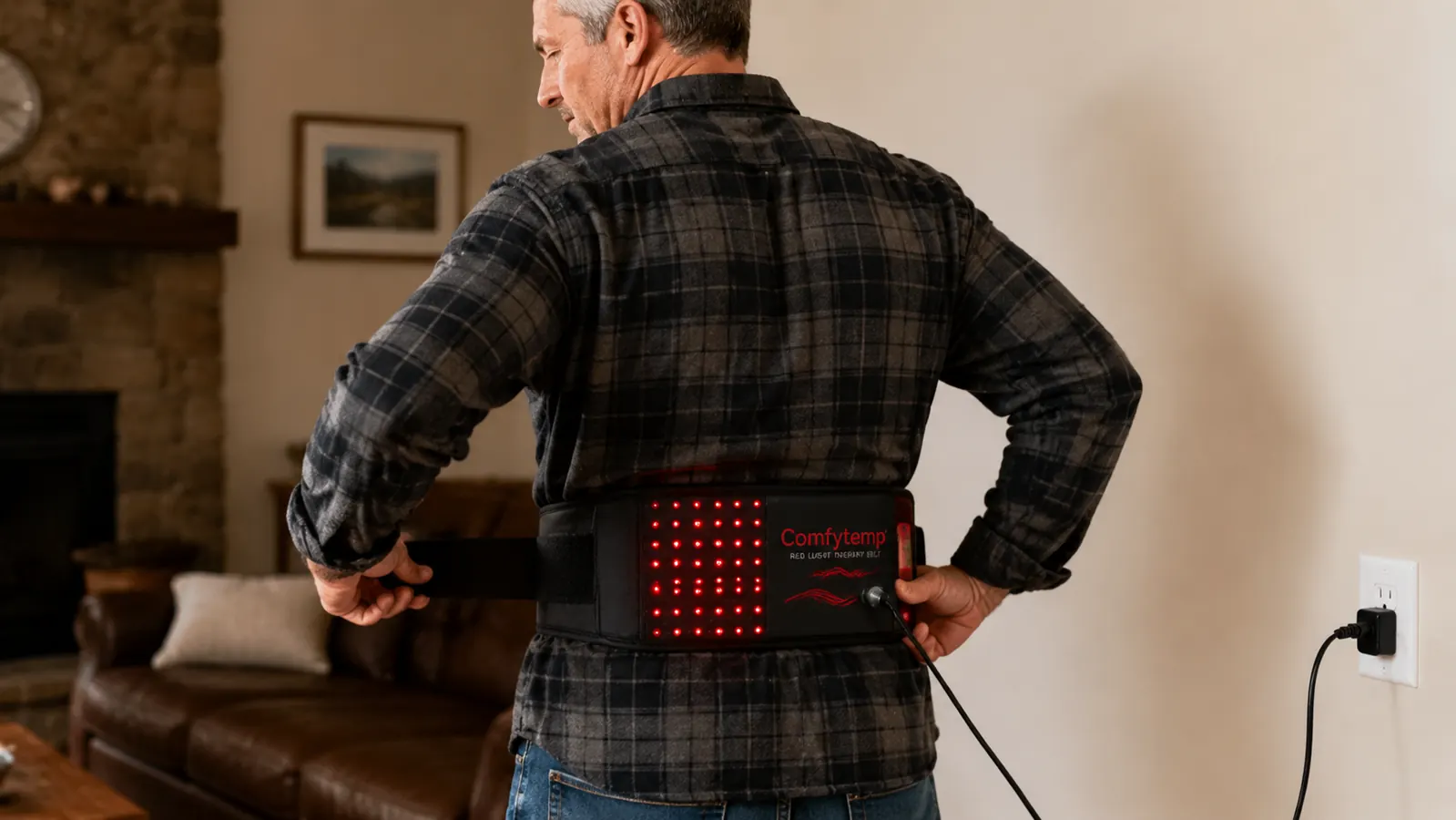
The strap itself wraps around and closes with a wide hook-and-loop closure, similar to a weightlifting belt but softer. At 6'1" and 210 pounds with a gut that's grown some since my twenties, I needed it extended most of the way out, and it still had a couple inches of adjustment left. A bigger guy, say over 250, might find it snug. It sits low, right across the belt line, which is exactly where my pain lives.
What's Actually Doing the Work
The belt runs 126 LEDs split between 660nm red light and 850nm near-infrared, pulling 22 watts total. I'm not a doctor and I'm not going to pretend I understand the cellular science behind red and near-infrared wavelengths, but the short version from what I've read is that red light works closer to the skin surface and near-infrared goes deeper into muscle tissue. Having both in one unit was the reason I picked this one over a couple cheaper single-wavelength pads I looked at first.
The panel covers a rectangle roughly the size of two open hands side by side, which lines up well across the lower back but doesn't wrap far enough to hit both hips at once. If your pain is centered lower back only, like mine, that's plenty. If you're dealing with hip flexor or SI joint pain out to the side, you'll be repositioning it or living with partial coverage.
It runs warm, not hot. There's a mild heat that builds over the 20-minute session, comparable to a moderate setting on a heating pad, but it's not the main event here. The light is the point. There's a single button to cycle through timer settings and you can tell it's on by the deep red glow through the fabric, which honestly is the first thing Donna commented on. She said I looked like I was hooked up to a tanning bed strapped to my belt loop, and she's not wrong.
Six Weeks In: What Actually Changed
Week one and two, I didn't notice much. I kept using it out of stubbornness more than belief. By week three, I started noticing that getting out of bed in the morning didn't involve the usual thirty seconds of sitting on the edge of the mattress working my back loose before I stood up. That was the first real signal something was different, not pain gone, just less of that first-move stiffness.
Weeks four through six is where I saw the most consistent difference. The wood-splitting weekend in June is a good test case because I've done that exact chore every June for years and know what the next two days usually feel like. This time, the next morning was noticeably better than past years, still tight, but I wasn't reaching for the ibuprofen bottle before coffee like I normally do. I still felt it. I'm not going to tell you a budget belt fixed a herniated disc, because it didn't and nothing short of surgery or serious time is going to do that. What it did was take the edge off the daily grind enough that I'm not white-knuckling through the last two hours of a shift.
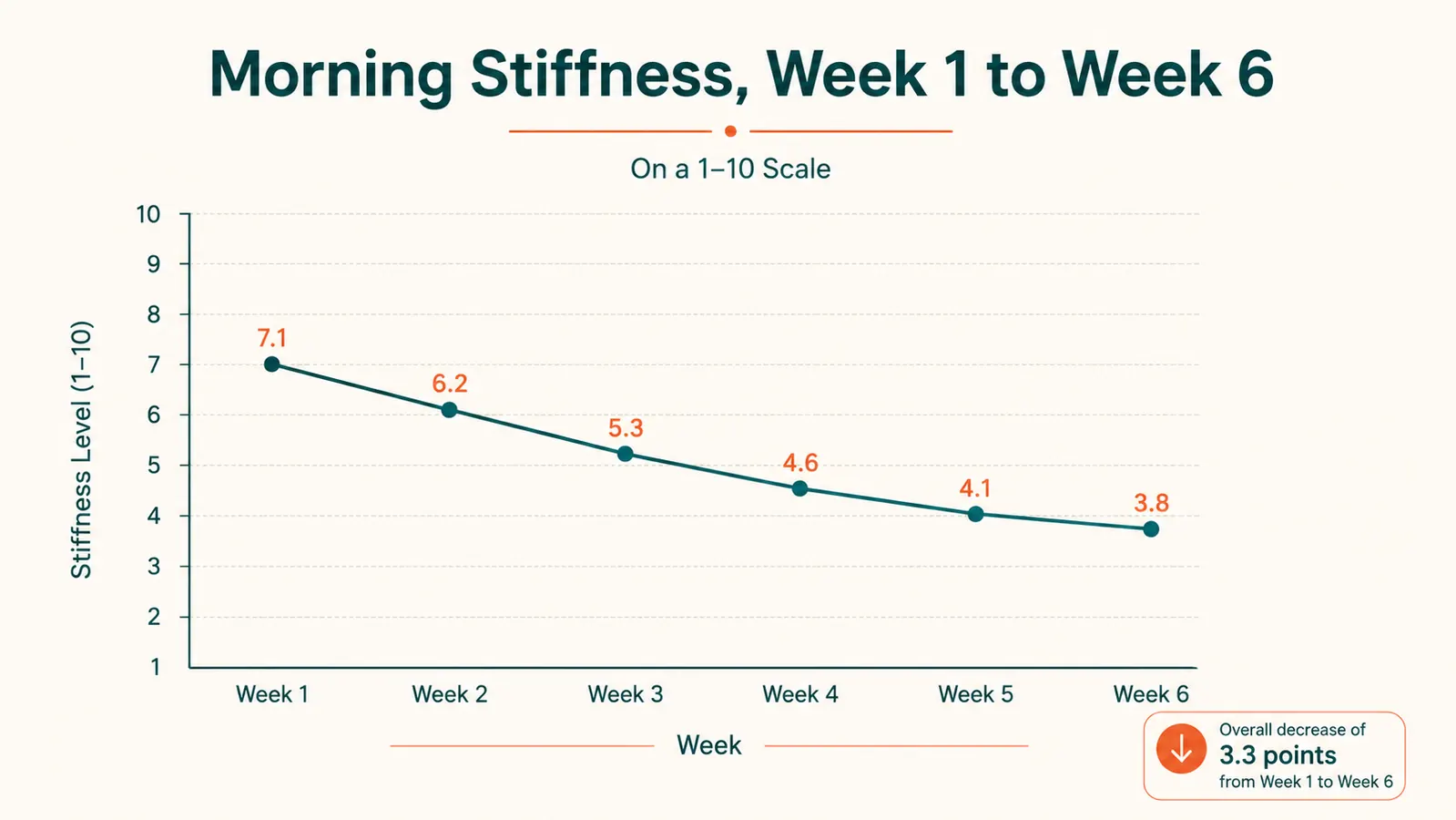
I started keeping a rough note on my phone rating morning stiffness on a scale of 1 to 10 starting week one, mostly because I wanted to know if I was fooling myself. Week one averaged around a 7. By week six I was averaging closer to a 4. That's not scientific, it's one guy's phone notes, but it tracks with how I actually feel getting out of bed now.
Wearing It Around Actual Work
This is the tradeoff nobody selling these things wants to talk about. Because it's corded and needs a wall outlet, it is not something you're wearing under a tool belt on the plant floor or under a gun belt in a deer stand. I tried plugging it in near my workbench at home once to see if I could get away with light tasks while it ran, and the cord length and the fact that I need to actually move around at work made that a non-starter. This lives in the after-work window, not during.
That means the timing matters more than I expected going in. I get the best results running it right after a physically hard day, before the muscles have a chance to fully tighten up and set for the night. If I put it off until right before bed after already sitting for two hours, I don't notice as much difference the next morning. Twenty minutes right when I walk in the door beats twenty minutes at 10pm, at least for me.
What I Looked at Before Buying This One
Before landing on the Comfytemp belt, I looked at handheld red light panels you hold or mount on a stand, and a couple of the flat pad versions you lay on the floor and lie down on top of. The handheld ones require you to actually hold something for 20 minutes, which for a guy who's already tired after work wasn't going to happen consistently. The floor pads work fine if you've got the patience to get down on the ground and stay still, but at my age getting down on the floor is its own small project.
The belt format won on convenience alone. I can strap it on, keep moving around the kitchen making dinner, sit down with Donna, whatever. It's the difference between a tool I'll actually use every day and one that ends up in a drawer after two weeks, which is exactly what happened with my old TENS unit.

How It's Held Up
Six weeks of near-daily use is enough to tell if something's cheaply made, and so far the belt itself is holding up fine. The hook-and-loop closure still grips tight, no fraying on the edges, and all 126 LEDs still light up even and bright, no dead spots or flickering that I've noticed. The cord shows a little wear right where it meets the plug, the kind of thing I keep an eye on with anything I plug in daily, but it's not frayed or exposed, just a slight crease from being coiled up and stuffed in a drawer between uses.
Cleanup is a non-issue. I wipe the inside fabric down with a damp rag every week or so since I'm usually wearing it after a sweaty day, and it hasn't held onto any smell. The control button and timer display have stayed responsive the whole time, no lag or need to mash the button twice to get it to register, which is more than I can say for the TENS unit I mentioned earlier.
What I Liked
- Hands-free design means I actually use it consistently instead of letting it collect dust
- Both 660nm and 850nm wavelengths in one unit, so you're not choosing between surface and deeper coverage
- Adjustable strap fit comfortably at 210 pounds with room to spare
- Automatic timer shuts it off, no need to babysit it or set a phone alarm
- Noticeably less first-move morning stiffness by week three
Where It Falls Short
- Corded only, so it's a living-room tool, not something for a hunting camp or tent site
- Coverage area doesn't reach the hips if your pain runs wider than a straight lower-back strip
- Not a fix for a herniated disc or anything structural, it manages the daily soreness, it doesn't repair the injury
- Needs consistent daily use for weeks before you notice a real pattern, not a one-session fix
It didn't fix my disc. It fixed the thirty seconds I used to spend sitting on the edge of the bed before I could stand up straight.
Who This Is For
If you've got a lower back that gets tight and achy from repetitive physical work, standing all shift, hauling gear on weekends, or the general wear and tear of doing manual labor for a couple decades, this fits into an evening routine without much friction. It's especially good for guys like me who won't stick with something that requires real effort or setup. Strap it on, sit down, done. It's also a decent fit if you're the type who won't sit still for a full massage appointment or drive across town for physical therapy twice a week. Twenty minutes at home after a shower covers it.
Who Should Skip It
If you need something portable for camp, a job site trailer, or anywhere without a reliable outlet, this isn't it, look at a battery version instead. And if you're dealing with a serious structural issue, disc herniation, recent surgery, anything a doctor is actively treating, this belongs alongside your actual medical care, not instead of it. I still see my doctor and I'm not suggesting a light belt replaces that relationship. And if you're expecting a light belt alone to undo years of wear and tear overnight, temper that expectation now. Mine took three full weeks before I noticed a real pattern, not three days.
Six weeks of less stiffness for less than the cost of one massage.
If your lower back is the first thing to give out after a long shift, this is worth adding to your evening routine before you spend real money on another round of appointments. Check today's price on Amazon.
Amazon Check Today's Price on Amazon →