

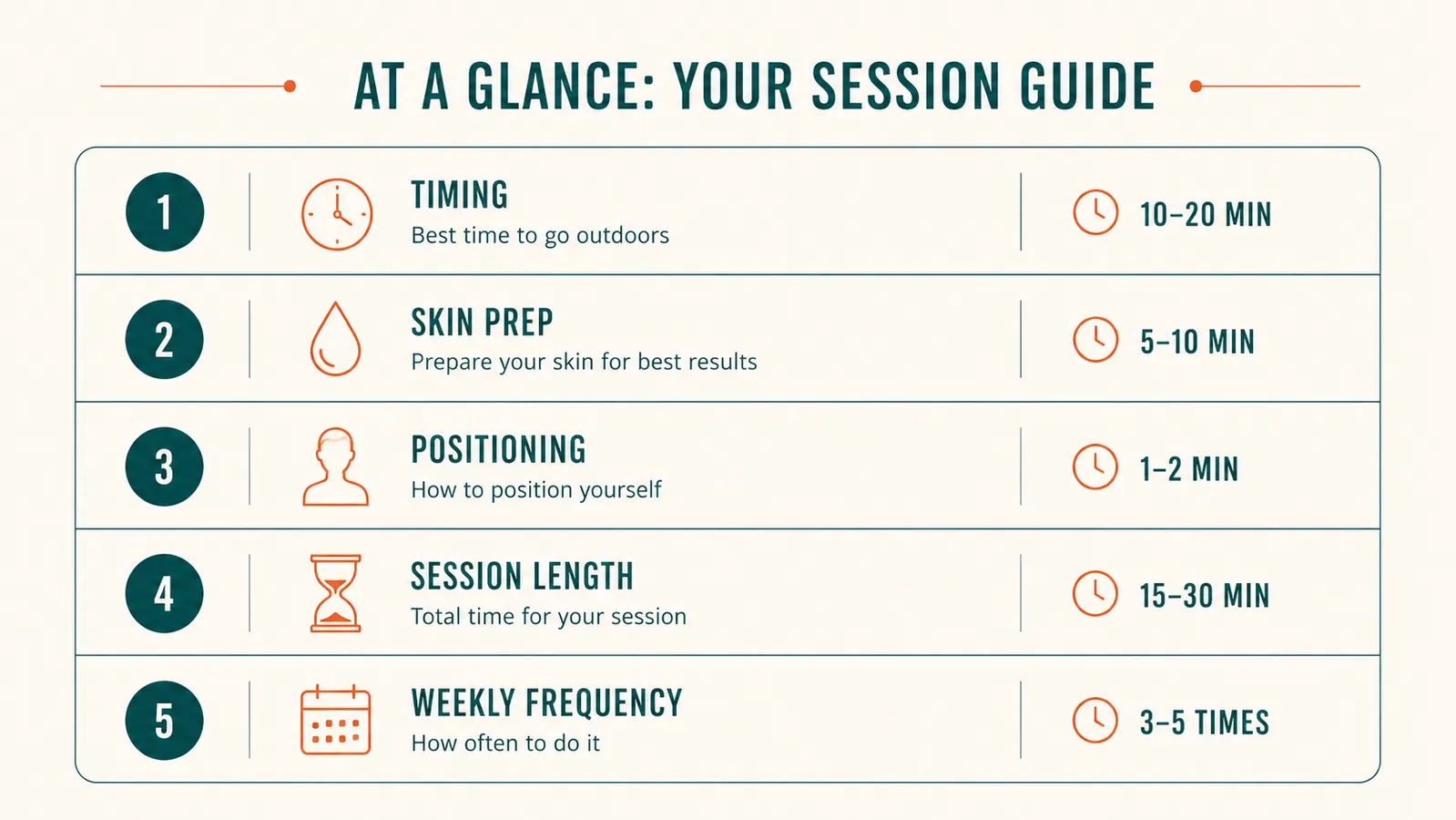
Red light therapy does not work the way a heating pad works, where you slap it on wherever and it feels good regardless. I found that out the hard way the first couple weeks I owned the Comfytemp belt, running it at random times, on random spots, for however long I felt like sitting still. It did basically nothing for those first two weeks. Once I actually built a routine around it, timing, skin prep, positioning, session length, and how often I ran it, that's when I started noticing my lower back wasn't the first thing to complain every morning.
I run maintenance at a bottling plant outside town, I'm 54, and my lower back has carried two decades of ladders, compressors, and pumps along with however many Novembers of dragging gear up a hillside. This isn't a lab writeup and I'm not a doctor, and I'm not going to pretend a light belt is going to undo damage that took twenty years to build up. It's the exact five-step routine I use on my own back with the Comfytemp red light belt, built from trial and error so you don't have to burn your own first two weeks figuring it out the slow way like I did.
Stop guessing with a heating pad. Give your back something built to actually do the work.
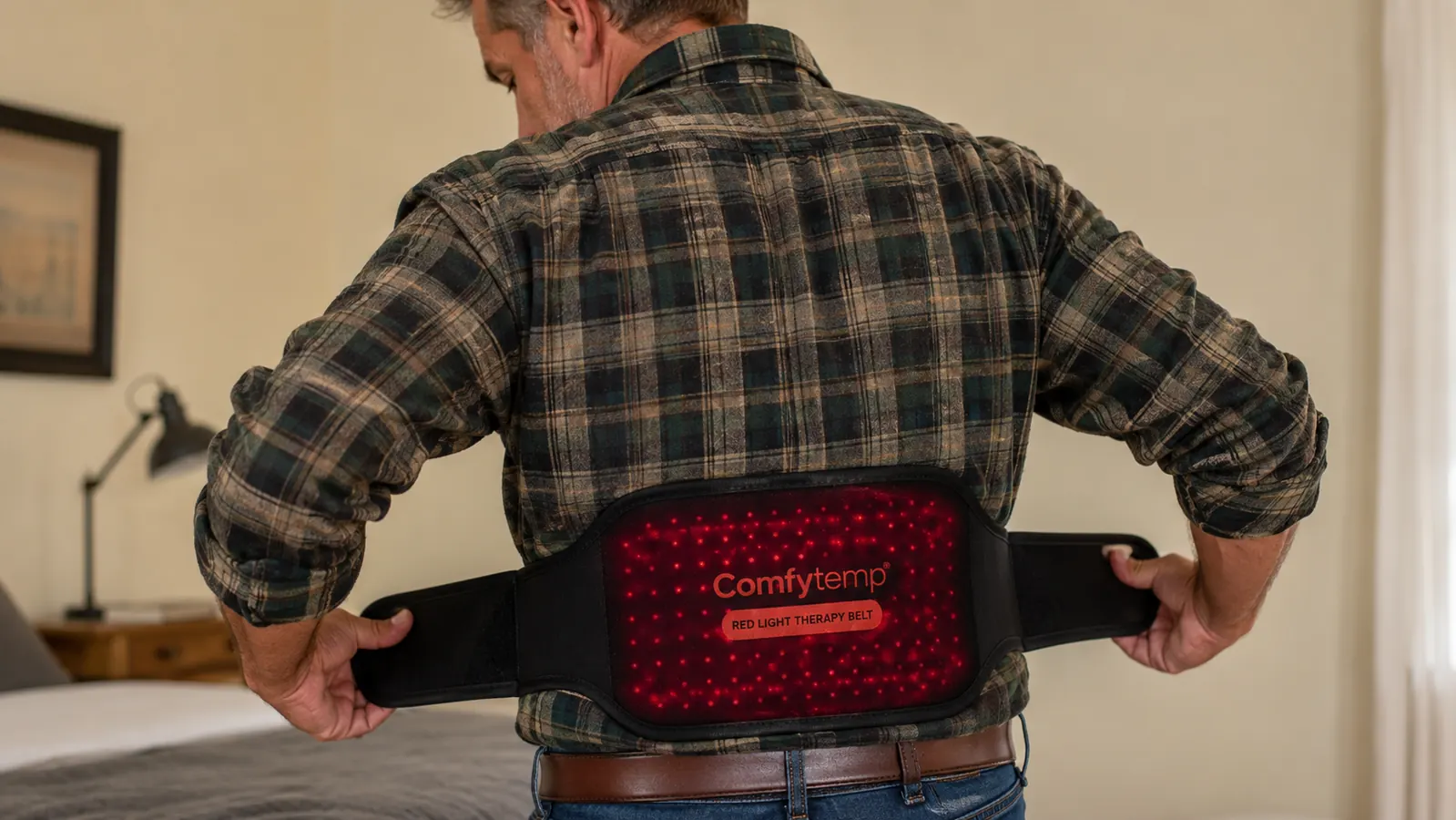
The routine below is built around the Comfytemp red light belt, 126 LEDs, 660nm and 850nm, hands-free and corded so you're not babysitting it. Check today's price and follow along step by step.
Amazon Check Today's Price on Amazon →Step 1: Time the Session Right After the Work, Not Hours Later
Timing made a bigger difference for me than anything else on this list, and it's the one thing most people skip past because it seems too simple to matter. The window that counts is right after the physical work is done, before your muscles have had a chance to fully tighten and set for the night. I get home around 5:30, and if I run the belt within the first thirty minutes of walking in the door, I notice a real difference the next morning. If I put it off until 10pm after two hours on the couch, the effect is smaller, at least for me.
The reasoning is pretty simple even without getting into the science of it. A muscle that's already tightened up and gone into full guard mode for the night is a harder job than one that's still warm and pliable from the day's work. Think of it the same way you'd think about stretching. Stretching a cold muscle at 10pm does less than stretching one that's still loose from activity twenty minutes earlier, and I treat the belt the same way.
This doesn't mean you're locked into one exact time every day. On a weekend when I've been out splitting wood or hauling a canoe down to the water, I run it as soon as I'm back at the truck or the cabin, sometimes still in my work clothes with sawdust on my sleeves. The rule is simple: sooner beats later, and consistent beats occasional. Pick a window that fits your actual schedule, whether that's right after a shift or right after a workout, and protect it the same way you'd protect any other habit you're trying to make stick.
Step 2: Prep the Skin Before You Strap Anything On
Light has to actually reach your skin to do anything, which sounds obvious until you realize how many things get in the way of that without you noticing. A heavy layer of sunscreen, thick lotion, or a shirt with any real thickness to it cuts down how much of the light gets through. I run mine directly against bare skin or over a thin t-shirt at most, never over a hoodie or a flannel, even on a cold night when a flannel would feel more comfortable.
Clean, dry skin works best. If I've just showered, I make sure my lower back is actually dry before strapping the belt on, not damp, since a wet strap tends to slide around more than a dry one and you spend the first five minutes readjusting it instead of sitting still. On days I skip the shower and go straight from the truck to the recliner, I just wipe the area down with a towel first to get rid of sweat and dust from the job site before the strap ever touches skin.
Check the skin itself before every session too. Skip a spot that's sunburned, freshly cut, or irritated, and don't run it directly over a fresh tattoo until that's fully healed. None of this is complicated, it's the same common sense you'd apply to sitting too close to a space heater, just applied to a smaller, cooler device strapped to your body for twenty minutes at a time.
Step 3: Position the Panel Over the Actual Sore Spot
This step sounds too obvious to write down, and it's the one I got wrong the most in my first couple weeks. I kept centering the belt on my beltline out of habit instead of actually checking where the soreness was that day. Some days my pain sits low, right at the belt line. Other days, especially after a day hunched over a piece of equipment, it's higher, closer to where my back meets my ribs. The belt only helps the tissue it's actually covering, so a few seconds of pressing around with your hand to find the real center of the ache is worth doing every single time, not just the first time you strap in.
The Comfytemp panel covers a rectangle roughly the width of two open hands side by side, which is plenty for a straight lower-back strip but doesn't reach out to the hips at the same time. If your soreness runs wider than that, plan on two shorter sessions, one centered on the low back and a second repositioned slightly to one side, rather than trying to cover everything at once with a belt that isn't built that wide in the first place.
Pull the strap snug enough that the panel stays flat against your skin without gapping, but not so tight it's uncomfortable to sit through twenty minutes. A gap between the panel and your skin means some of that light is hitting air instead of tissue, which is wasted output no matter how bright the panel looks glowing through your shirt. I learned to check this by feel, running a hand along the edge of the panel after strapping in, making sure it's flush all the way around before I hit the timer button.

Step 4: Set a Session Length and Actually Stick to It
I settled on twenty minutes as my standard session, which lines up with the built-in timer on the Comfytemp belt so I never have to think about it. Longer isn't automatically better here. I tested a couple 30 to 40 minute sessions early on out of impatience, wanting faster results, and didn't notice anything extra for the added time beyond a warmer strap and a longer stretch of sitting still than I actually had time for on a weeknight with dinner still to make.
The automatic shutoff is one of the better features here for a guy like me who gets distracted by a text or the highlights coming on. Without it I'd either forget the thing was running and leave it on too long, or check my phone every three minutes wondering if it's done, which defeats the point of a hands-free routine in the first place. Set it, sit down, let it shut itself off, and go about the rest of your evening.
If you're brand new to this, there's nothing wrong with starting shorter, ten to fifteen minutes for your first handful of sessions, just to see how your body responds before committing to the full twenty. I didn't need to scale back myself, but I know a couple guys at the plant who run it shorter simply because they don't have twenty spare minutes most nights, and something consistent at ten minutes beats an inconsistent twenty minutes you only manage twice a week and then give up on.
Step 5: Build a Weekly Pattern Instead of Using It Only When It Hurts
The biggest shift for me was treating this like a daily habit instead of a painkiller I reach for only when something's already flared up. I run the belt most nights I'm home, not just the nights my back is loudly complaining about the day. Using it only on the worst days is a bit like only brushing your teeth when one already hurts. You're managing damage instead of staying ahead of it, and staying ahead of it is the whole point of a recovery routine.
That said, I'm not running it every single day without exception. Weekends where I'm not doing anything physical, I'll sometimes skip it or run a shorter session, and I give myself the occasional night off just because I'm tired and want to go straight to bed. What matters more than perfect daily use is not letting three or four days slip by in a row, especially heading into a physically demanding stretch like deer season or a big weekend project. I try to run it the two or three nights leading into something I know is going to beat up my back, not just the nights after, so the tissue starts loose instead of playing catch-up.
I also started keeping a rough note on my phone rating how stiff I felt getting out of bed each morning, on a simple 1 to 10 scale. It's not scientific, it's one guy jotting a number down before coffee, but it gave me something to look back on instead of relying on memory, which tends to smooth over the bad mornings once a good week rolls around. That's the only way I actually noticed the pattern shift from a consistent 7 in the first couple weeks down to something closer to a 4 by the end of the first month. Without writing it down, I probably would have talked myself out of believing it was doing anything at all, the same way I talked myself out of the heating pad working after a while.
What Else Helps
Red light therapy isn't a stand-alone fix and I'd be selling you something I don't believe if I told you otherwise. I still stretch before a physical day, and I still try to walk around the yard for a few minutes after I clock out instead of dropping straight into the recliner the second I'm through the door. What the belt has given me is a consistent, low-effort piece of the routine that fills a gap those other habits don't quite reach, the deep ache across the low back that stretching alone never fully touches no matter how long I hold it. Pair it with decent sleep and reasonable pacing during the workday, and it earns its spot in the rotation. If you're weighing this against a real course of physical therapy for something more serious than everyday stiffness, or you want the longer week-by-week rundown on how this exact belt has held up on my own back over months of use, I've written both of those up separately for anyone who wants the full picture. This routine is for the ordinary soreness that comes from doing physical work for a living, not a replacement for seeing a doctor if something feels genuinely wrong, sharp, or like it's getting worse instead of better week over week.
It's not the light that fixes anything on its own. It's doing the same five steps often enough that your body starts to expect it.
Twenty minutes, same time, same spot. That's the whole routine.
No appointment, no guesswork on wavelengths, no manual to read twice. Strap it on, hit the timer, let it run.
Amazon Check Today's Price on Amazon →